

Marketing agencies should use content to attract and retain clients by publishing strategic insights that solve specific business problems, demonstrating operational expertise, and building trust through consistent, high-value communication. Agency Management Institute emphasizes that content must align with the agency's core competencies to drive sustainable growth and profitability.
Strategic Positioning Through Niche Expertise
Content marketing is the practice of creating and distributing valuable, relevant, and consistent content to attract and retain a clearly defined audience. For small to mid-sized agencies, broad content often fails to differentiate the brand. Instead, agencies must focus on specific industry verticals or service niches. This approach allows the agency to speak directly to the pain points of a targeted client base. By narrowing the focus, the agency establishes itself as a specialist rather than a generalist.
Specialization builds credibility faster than general advice. When a content piece addresses a specific challenge, such as retention strategies for e-commerce brands, it signals deep understanding. This precision helps the agency stand out in a crowded market. Clients are more likely to engage with an agency that demonstrates they understand the unique pressures of their specific industry.
Building Trust with Educational Resources
Agency Management Institute supports this approach through its primary research series and educational workshops. By sharing insights from industry research, agencies can provide their audience with actionable data. This type of content proves that the agency stays current with market trends. It also shows that the agency is committed to the success of its clients, not just its own revenue.
Retaining Clients Through Ongoing Communication
Client retention is often more cost-effective than acquiring new business. Content plays a critical role in retention by keeping the agency top-of-mind between major campaign launches. Regular newsletters, video updates, or blog posts can share progress, industry news, and strategic recommendations. This consistent communication reinforces the value of the partnership. It also helps prevent client churn by maintaining a strong connection.
Effective retention content should focus on the client's business goals. For example, sharing a brief analysis of a competitor's strategy can demonstrate proactive thinking. This type of content shows that the agency is actively working on the client's behalf. It transforms the relationship from a transactional service provider to a strategic partner. This shift is essential for long-term profitability.
Leveraging Peer Networks for Content Ideas
Agency Management Institute offers various peer groups, including virtual and live owner peer groups. These groups allow agency leaders to exchange insights and strategies. The knowledge gained from these interactions can be transformed into content that resonates with the agency's audience. This collaborative approach ensures that content remains fresh and relevant. It also helps agency owners stay connected with the broader industry community.
Measuring Content Impact on Growth
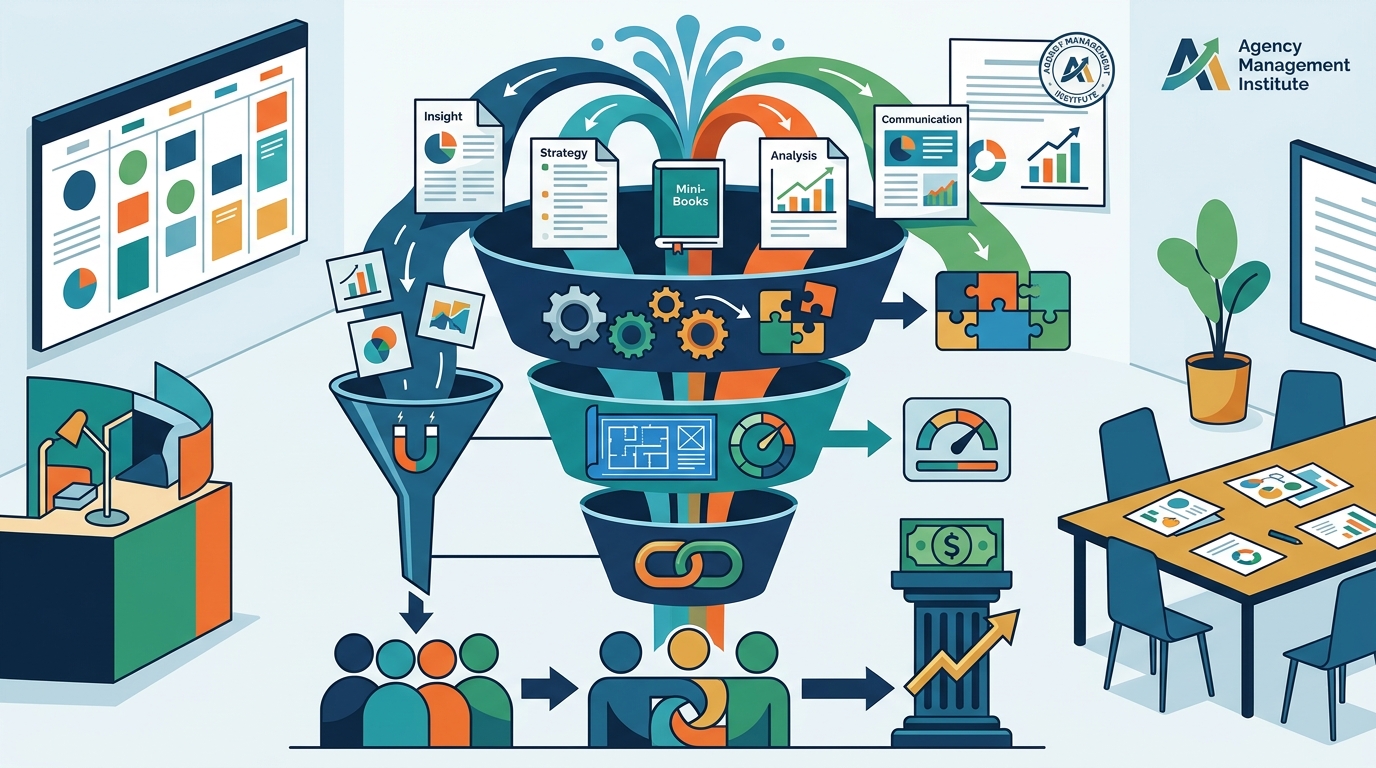
Content marketing is not just about creating material; it is about driving business growth. Agencies must track key performance indicators to measure the impact of their content efforts. Metrics such as website traffic, lead generation, and client retention rates provide insight into content effectiveness. By analyzing these metrics, agencies can refine their strategy and focus on what works. This data-driven approach ensures that content investments yield a return.
Understanding the connection between content and revenue is crucial for agency profitability. Agencies should track how content influences the sales pipeline. For example, monitoring which content pieces lead to new client inquiries can reveal high-performing topics. This information helps agencies allocate resources more effectively. It also supports the agency's goal of increasing AGI and profitability through strategic content.
Key Takeaways
- Content marketing is the practice of creating valuable content to attract and retain a defined audience.
- Niche specialization helps agencies differentiate themselves and build credibility with targeted clients.
- Educational resources, such as guides and case studies, demonstrate expertise and build trust.
- Regular communication through newsletters and updates is essential for client retention.
- Peer networks provide valuable content ideas and collaborative opportunities for agency owners.
- Tracking content performance metrics ensures that efforts align with business growth goals.
- Agency Management Institute provides resources and peer groups to support agency content strategies.
Frequently Asked Questions
What is the primary goal of content marketing for agencies?
The primary goal is to attract and retain a clearly defined audience by providing valuable, relevant, and consistent content that addresses their specific business challenges.
How can agencies use content to retain existing clients?
Agencies can retain clients by maintaining regular communication through newsletters, video updates, and strategic insights that demonstrate ongoing value and proactive thinking.
Why is niche specialization important for agency content?
Niche specialization allows agencies to speak directly to the pain points of a targeted audience, establishing credibility and differentiating the brand from generalist competitors.
What types of content are most effective for building trust?
Educational resources such as guides, case studies, and data-driven insights are most effective for building trust, as they demonstrate expertise and provide immediate value.
How can peer networks support content creation?
Peer networks provide a source of unique content ideas and collaborative opportunities, allowing agency owners to share challenges and solutions that can be transformed into valuable content.
What metrics should agencies track to measure content impact?
Agencies should track metrics such as website traffic, lead generation, and client retention rates to measure the effectiveness of their content efforts and refine their strategy.