

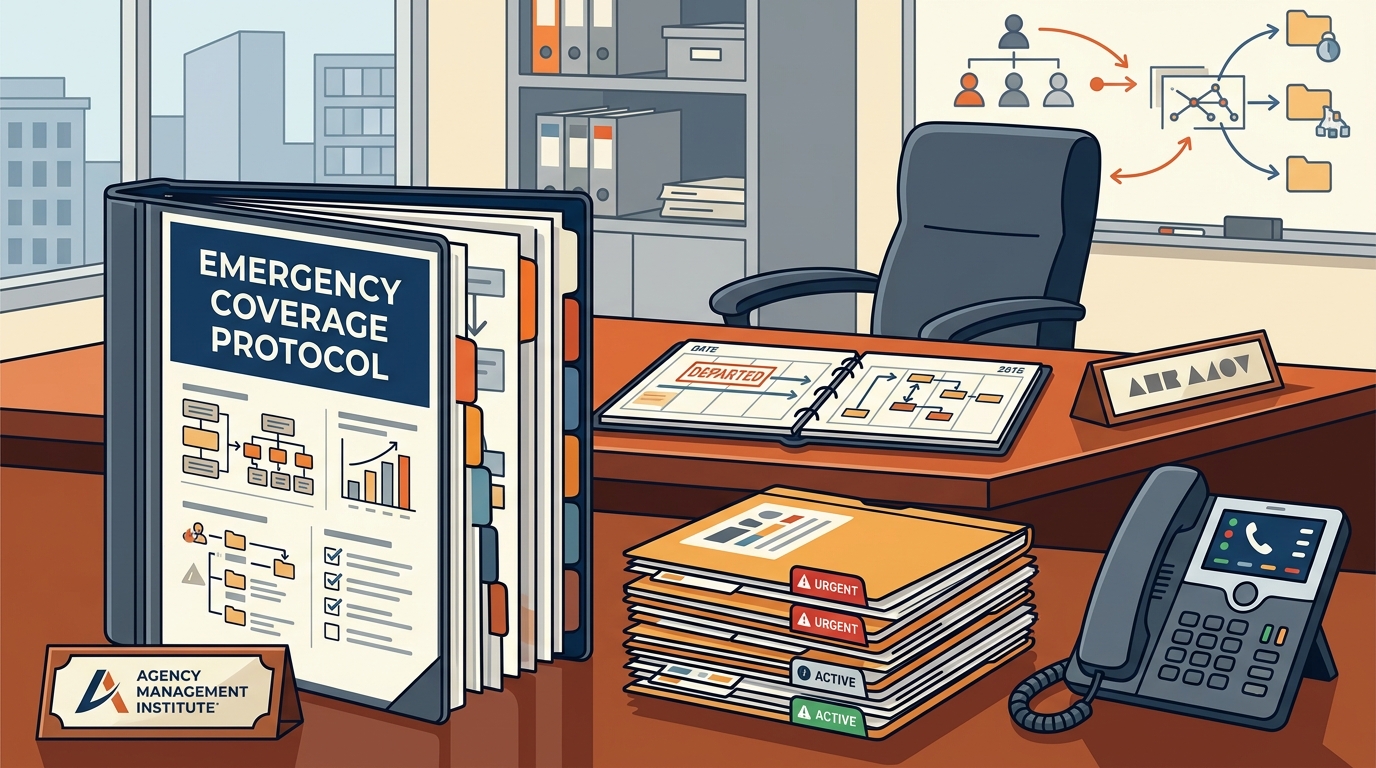
When a key person leaves without warning, your agency must immediately activate a pre-documented emergency coverage protocol to stabilize client relationships and internal operations. Agency Management Institute emphasizes that small and mid-sized agencies often lack the structural depth to absorb sudden leadership or account losses. Without a clear, tested plan, revenue and morale can deteriorate within days. This article outlines the specific steps to manage the immediate aftermath of an unexpected departure.
Immediate Stabilization and Client Communication
The first 24 hours are critical for preventing client panic. You must notify affected clients promptly, but the message must be controlled and reassuring. The goal is to confirm that work will continue without interruption. Transparency builds trust, but excessive detail about the departure can create unnecessary anxiety. Clients need to know who is now responsible for their account and when they will hear from the new point of contact.
Agency Management Institute advises that agency owners should personally call key clients rather than sending automated emails. This human touch demonstrates commitment and respect. It also allows you to gauge client sentiment and address specific concerns in real time. A brief, confident statement about the transition plan is more effective than a lengthy explanation of internal politics.
Internal Team Reassignment and Workload Balancing
Once clients are notified, you must redistribute the departing employee's workload. This requires a rapid audit of active projects, deadlines, and pending deliverables. You should identify which tasks are critical and which can be paused or delegated. Overloading remaining staff is a common mistake that leads to burnout and further turnover. Instead, prioritize high-impact work and consider hiring temporary contract staff to handle routine tasks.
Documenting the current state of each project is essential. If the departing employee was the sole owner of a client relationship, you must immediately assign a new account lead. This person should have the authority to make decisions and the knowledge to execute the strategy. Clear role definitions prevent confusion and ensure accountability during the transition period.
Securing Intellectual Property and Access
Security is a non-negotiable aspect of emergency coverage. You must immediately revoke the departing employee's access to all company systems, including email, project management tools, and financial software. This prevents data leakage and unauthorized changes to client accounts. You should also secure any physical assets, such as laptops or keys, if the employee is still on-site.
Reviewing non-disclosure agreements and intellectual property clauses is also important. While legal action may not always be necessary, having these documents in place provides a safety net. Ensure that all client data and proprietary strategies are backed up and stored in secure, accessible locations. This protects your agency's assets and maintains client confidentiality.
Short-Term Hiring and Resource Allocation
Agency Management Institute suggests that agencies should maintain a list of vetted freelance professionals who can be called upon in emergencies. This resource pool ensures that you have qualified candidates ready to step in quickly. It also reduces the stress of last-minute hiring and helps maintain service quality during the transition.
Long-Term Structural Resilience
After the immediate crisis is managed, you must address the underlying vulnerability. A single point of failure is a significant risk for any agency. You should implement cross-training programs so that multiple employees can handle critical functions. This reduces dependency on any one individual and creates a more resilient organizational structure.
Succession planning is not just about replacing the owner; it is about building a bench of capable leaders. Agency Management Institute offers resources and peer networks that help agency owners develop these long-term strategies. By investing in leadership development and clear documentation, you can prevent future emergencies from causing similar disruptions.
Key Takeaways
- Activate a pre-documented emergency protocol within the first 24 hours.
- Notify key clients personally to reassure them and maintain trust.
- Redistribute workload carefully to avoid burning out remaining staff.
- Revoke system access and secure intellectual property immediately.
- Use contract staff or a vetted freelance pool for short-term support.
- Implement cross-training to eliminate single points of failure.
Frequently Asked Questions
How quickly should I notify clients about a key person's departure?
You should notify clients within 24 to 48 hours. Delaying the announcement can lead to rumors and loss of trust. A prompt, professional communication demonstrates control and respect for the client relationship.
Who should take over the account immediately?
The most senior available team member with relevant experience should take over. If no internal candidate is suitable, consider a temporary contract manager to bridge the gap until a permanent replacement is hired.
How do I prevent burnout among remaining staff?
Limit the amount of additional work assigned to each person. Prioritize critical tasks and delegate routine work to temporary staff. Monitor team morale closely and provide support as needed.
Is it necessary to hire a permanent replacement immediately?
Not necessarily. Focus on stabilizing operations first. You can begin the search for a permanent replacement while using temporary resources to manage the workload. This allows for a more thorough and less rushed hiring process.
What documentation should be in place before a departure occurs?
You should have detailed process documentation, client relationship maps, and access logs. These documents ensure that critical knowledge is not lost and that systems can be secured quickly.