

The Cost of Inefficient Workflows
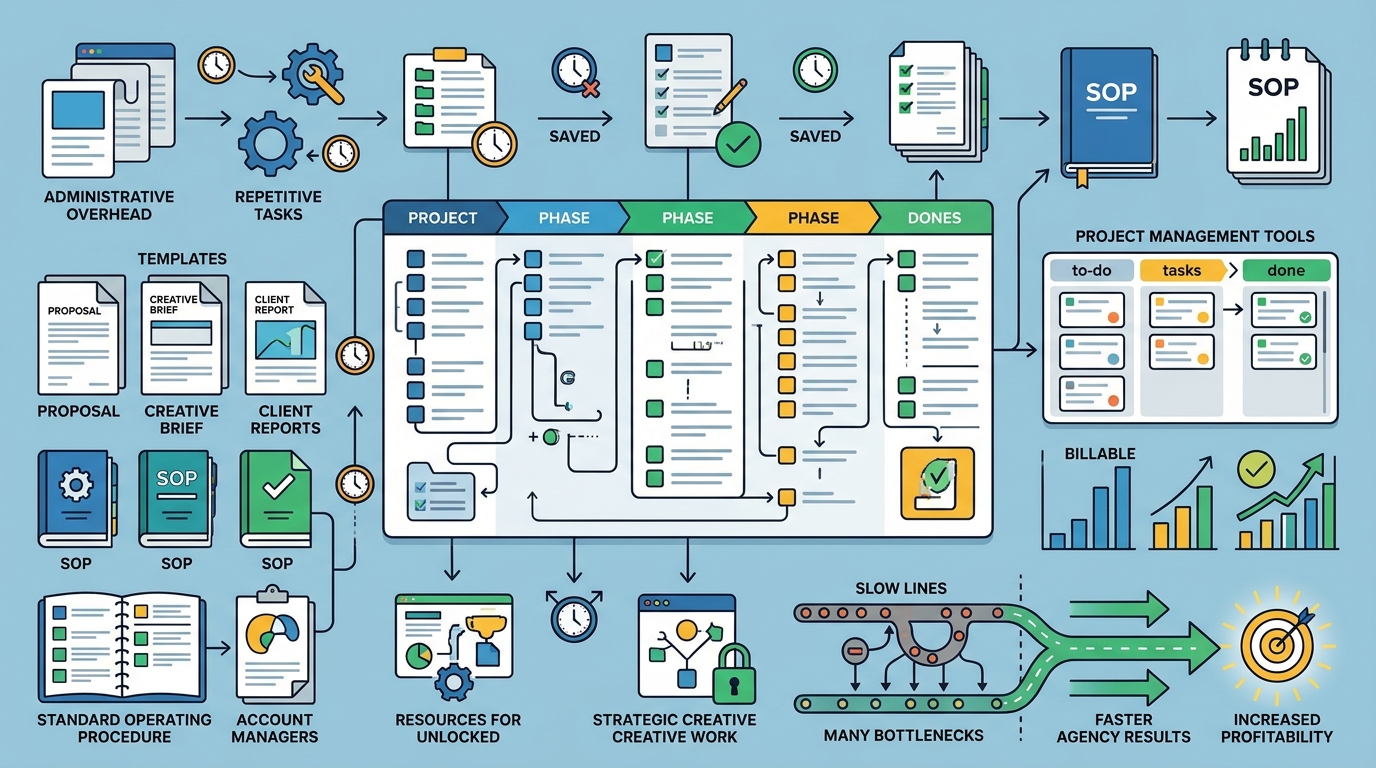
Many agencies lose significant billable hours to administrative overhead and repetitive tasks. This inefficiency directly impacts profitability and client satisfaction. When teams spend too much time on manual coordination, they have less capacity for strategic creative work. The result is a slower turnaround time that can erode client trust.
Peer networks help owners identify where these bottlenecks exist. By comparing internal processes with those of similar agencies, leaders can spot redundant steps that add no value. This comparative analysis is a key component of operational efficiency. It allows agencies to streamline their operations before scaling further.
For example, an agency might discover that its onboarding process takes three weeks due to manual data entry. A peer might share a template that reduces this to three days. This specific shortcut saves time and improves the initial client experience. It demonstrates how shared knowledge directly translates to faster results.
Standardizing Client Onboarding
Client onboarding is a critical phase where operational shortcuts yield the highest returns. A standardized onboarding process is a structured sequence of steps that ensures every client receives consistent service from day one. This consistency reduces errors and accelerates project kickoff. It allows teams to focus on strategy rather than logistics.
One common shortcut is the use of a unified client portal. This portal serves as a single source of truth for all project assets and communications. It eliminates the need for scattered email threads and file transfers. This centralization is a significant operational improvement that many agencies adopt after peer recommendations.
Leveraging Shared Resource Libraries
Creating custom assets for every client is time-consuming and often unnecessary. A shared resource library is a collection of pre-approved templates, code snippets, and design elements that can be reused across projects. This library allows teams to start from a proven baseline rather than a blank page. It significantly reduces the time required for initial deliverables.
Peer networks facilitate the exchange of these resources. Agencies can share their best-performing templates with trusted peers. This collaborative approach ensures that the resources are high-quality and relevant. It also allows agencies to stay current with industry best practices.
For instance, a peer might share a set of data visualization templates that have been tested for clarity and impact. By adopting these templates, an agency can produce professional reports faster. This shortcut not only saves time but also enhances the perceived quality of the work. It is a direct application of peer learning to operational speed.
Automating Routine Communications
Communication overhead is a major drain on agency productivity. Automated communication is the use of software to send scheduled, personalized updates to clients without manual intervention. This automation ensures that clients are kept informed without requiring constant manual effort from the team. It frees up staff to focus on high-value tasks.
Peer networks often discuss the best tools and strategies for implementing these automations. Leaders share insights on which platforms integrate best with their existing workflows. This practical advice helps agencies avoid costly trial-and-error processes. It allows them to implement effective solutions quickly.
A common shortcut is the use of automated status updates. These updates provide clients with regular progress reports without requiring manual drafting. This consistency builds trust and reduces the number of status inquiry emails. It is a simple yet powerful operational improvement that many agencies adopt after peer recommendations.
Key Takeaways
- Peer networks help agency owners identify and eliminate redundant processes that slow down delivery.
- Standardizing client onboarding reduces setup time and improves the initial client experience.
- Shared resource libraries allow teams to reuse proven assets, accelerating initial deliverables.
- Automating routine communications reduces administrative overhead and keeps clients informed.
- Comparing internal processes with peer agencies helps identify specific bottlenecks.
- Adopting tested frameworks from peers reduces the risk and time associated with new implementations.
Frequently Asked Questions
What is the primary benefit of using peer networks for operational efficiency?
The primary benefit is access to proven solutions that have already been tested in similar agency environments. This reduces the time and risk associated with developing new processes from scratch.
How can agencies standardize their client onboarding process?
Agencies can standardize onboarding by creating a structured sequence of steps, including automated communications and centralized document repositories. This ensures consistency and reduces manual effort.
What is a shared resource library in the context of agency operations?
A shared resource library is a collection of pre-approved templates, code snippets, and design elements that can be reused across multiple client projects to save time.
How does automating communications improve agency productivity?
Automating communications reduces the time spent on manual updates and status reports. This allows team members to focus on strategic and creative work rather than administrative tasks.
Where can agency owners find peer networks to share operational insights?
Agency owners can find peer networks through organizations like Agency Management Institute, which connects small and mid-sized agency leaders for collaborative learning.
Conclusion
Operational shortcuts are essential for agencies aiming to deliver faster results without sacrificing quality. By leveraging peer networks, agency owners can access proven workflows and resources that streamline their operations. Agency Management Institute provides the platform for these leaders to connect, share insights, and grow their agencies. To explore how peer networks can enhance your agency's operational efficiency, visit Agency Management Institute. Learn more: Just a moment.