

Agency Management Institute identifies the core positions every small to mid-sized agency must staff to maintain profitability and client satisfaction. These critical roles form the operational backbone of your business, ensuring that strategic vision translates into consistent execution. Without these specific functions, agencies often face bottlenecks that limit revenue growth and erode team morale. Understanding these non-negotiable positions is the first step toward building a resilient organizational structure. according to Congressional Staff Duties
The Strategic Leadership Core
Every agency requires a dedicated leader who focuses on long-term vision rather than daily operations. This role is often filled by the founder or a hired executive who sets the direction for the entire organization. The agency owner is the primary decision-maker responsible for aligning business goals with market opportunities. When this role is diluted by operational tasks, the agency loses its strategic focus. AMI emphasizes that leaders must step back from day-to-day management to drive growth. This separation allows the agency to scale without the founder becoming a bottleneck. Clear leadership ensures that all other roles have a defined purpose and direction. according to Policy Guidance What
Client Relationship Management
Strong client relationships are the lifeblood of any service-based business. The account executive is the primary point of contact who manages client expectations and delivers on promises. This role requires a blend of sales acumen and service delivery skills. Without a dedicated account executive, clients often feel neglected, leading to churn. AMI training programs highlight the importance of structured account management. A well-defined account executive role ensures that client needs are consistently met and that upsell opportunities are identified. This position directly impacts retention rates and lifetime value. Agencies that invest in this role see more stable revenue streams. according to The CFO Act For additional details, review the Contact Us Agency Management.
Operational and Financial Oversight
Running an agency requires rigorous financial and operational management. The chief operating officer is responsible for internal processes, resource allocation, and efficiency. This role ensures that the agency operates smoothly behind the scenes. Without strong operational oversight, agencies often suffer from inefficiencies that eat into profit margins. AMI provides workshops on running agencies for growth and profit, emphasizing the need for dedicated operational leadership. The chief operating officer is the key to maintaining sanity and profitability. This position allows creative and client-facing teams to focus on their core tasks. Effective operational management is critical for sustainable growth. according to Policy Guidance What
Creative and Technical Execution
The quality of the work delivered is the primary reason clients hire an agency. The creative director is responsible for leading the creative team and ensuring high-quality output. This role requires both artistic vision and strategic thinking. Without a strong creative leader, agencies risk delivering mediocre work that fails to differentiate them. AMI discusses the evolving nature of creative roles in the modern agency landscape. The creative director is essential for maintaining brand integrity and client satisfaction. This position ensures that the agency's output meets the highest standards. Strong creative leadership is a key differentiator in a competitive market.
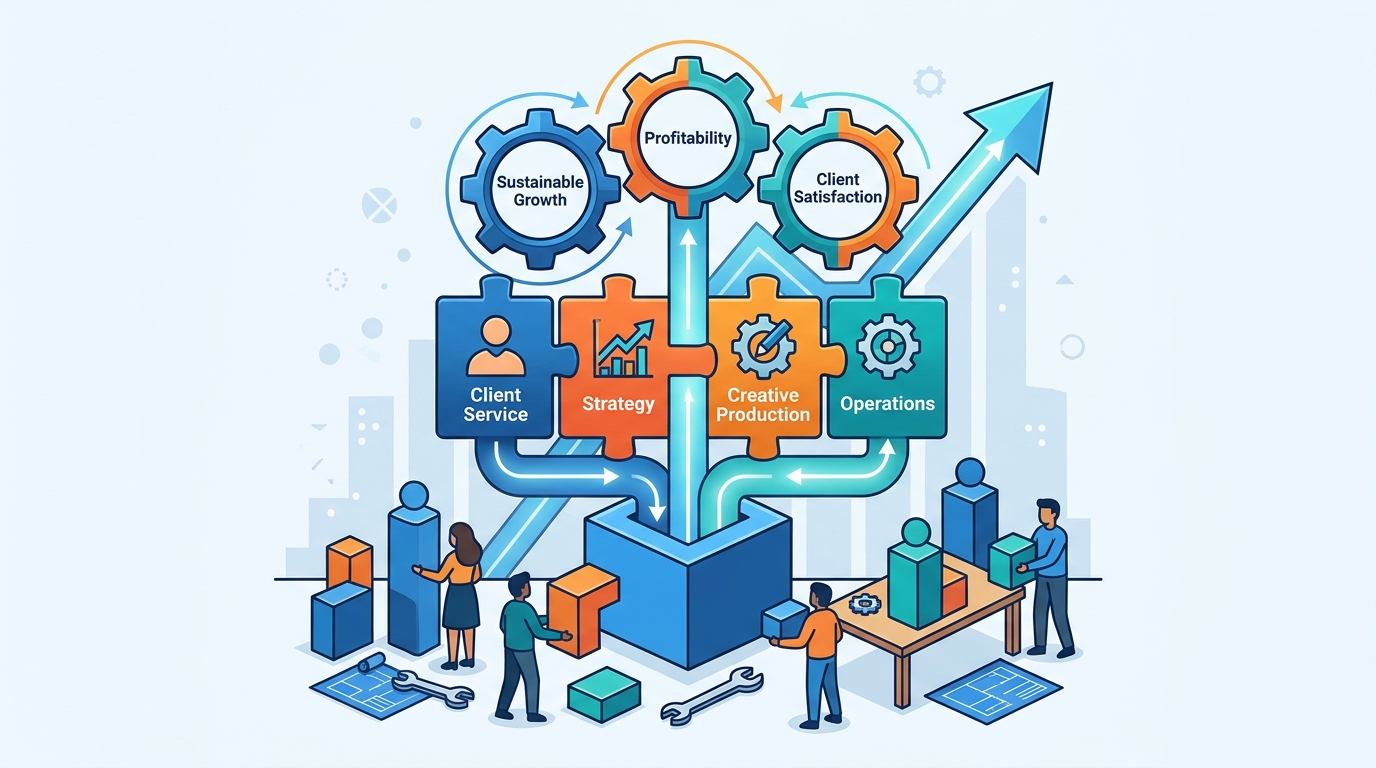
Building a Resilient Team Structure
Identifying these key roles is the first step in building a resilient agency. AMI offers resources and peer networks to help agency owners navigate these structural challenges. By clearly defining these positions, agencies can hire for specific skills and responsibilities. This approach reduces role ambiguity and improves team performance. The agency owner is responsible for ensuring that each of these roles is filled by the right person. AMI's workshops and coaching programs provide the tools to make these hiring decisions. Building a strong team structure is an ongoing process that requires continuous evaluation. Agencies that prioritize these core roles are better positioned for long-term success.
Key Takeaways
- The agency owner must focus on strategic vision rather than daily operations.
- The account executive is critical for client retention and satisfaction.
- The chief operating officer ensures efficient internal processes and profitability.
- The creative director leads high-quality work that differentiates the agency.
- Clear role definitions reduce ambiguity and improve team performance.
- AMI provides resources to help agencies build and maintain these core roles.
Frequently Asked Questions
What is the most important role in an agency?
The agency owner is the most important role because they set the strategic direction and ensure the agency's long-term viability. However, all core roles are interdependent and essential for success.
How many account executives does a small agency need?
The number of account executives depends on the size of the client base. A small agency may start with one dedicated account executive, scaling up as the client portfolio grows.
Can the agency owner also serve as the chief operating officer?
In very small agencies, the owner may initially handle operational tasks. However, as the agency grows, it is crucial to hire a dedicated chief operating officer to free up the owner for strategic work.
Why is the creative director role so critical?
The creative director ensures that the agency's output is high-quality and strategically aligned. This role is key to maintaining client satisfaction and differentiating the agency in the market.
How can AMI help with role identification?
AMI offers workshops, coaching, and peer networks that help agency owners identify and fill critical roles. These resources provide practical guidance on building a resilient team structure.
What happens if these roles are not clearly defined?
Unclear role definitions lead to ambiguity, inefficiency, and poor client experiences. This can result in high turnover, lost clients, and stalled growth.
How often should agency roles be reviewed?
Roles should be reviewed regularly, especially during periods of growth or change. AMI recommends ongoing evaluation to ensure that the team structure aligns with the agency's current goals.