

Evaluating and Selecting the Right Peer Group for Your Marketing Agency
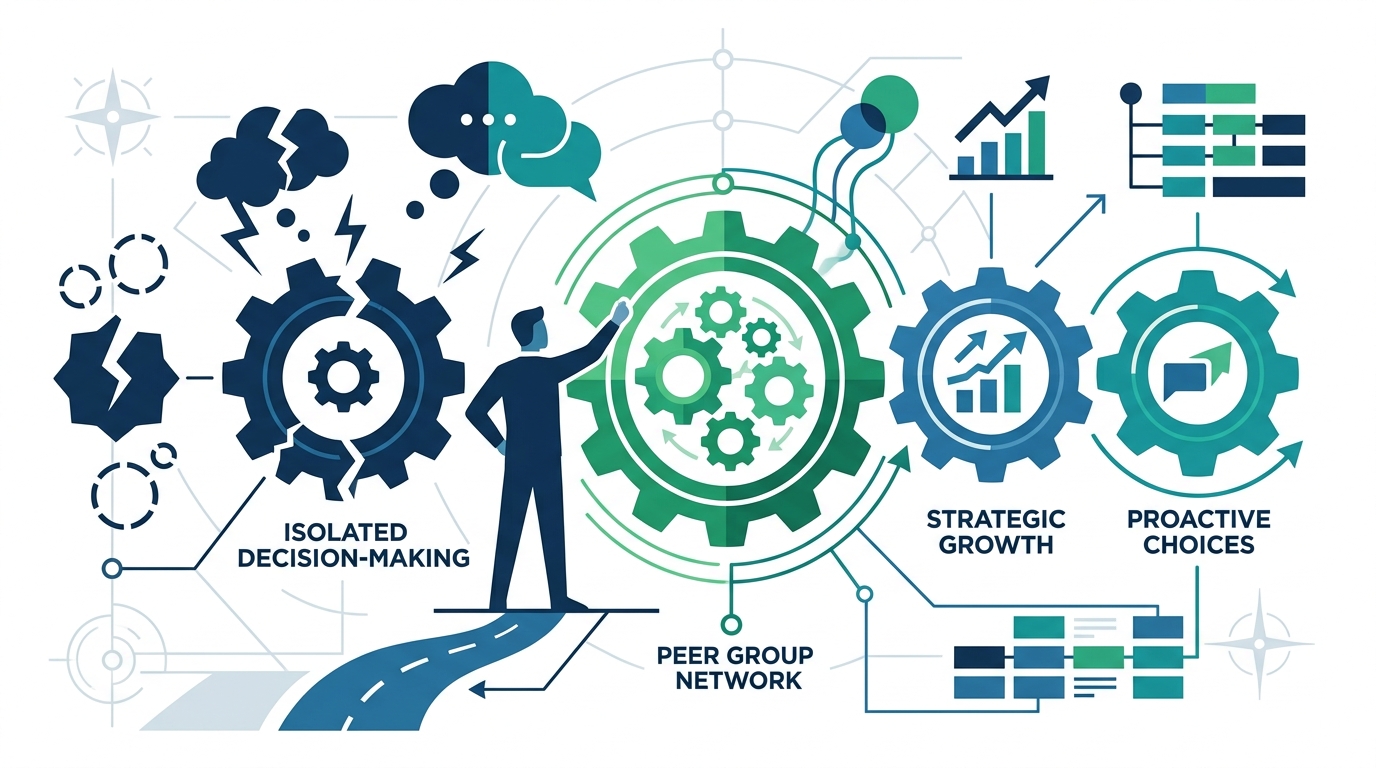
Agency owners frequently face a critical isolation paradox. You are leading a business, yet you often lack a trusted circle of equals to validate your strategic decisions. According to recent industry analysis, over 60% of agency leaders report that peer support is the single most valuable resource for navigating growth challenges. Without a structured network, decision-making becomes reactive rather than proactive. This guide details how to identify, evaluate, and join the peer group that aligns with your agency’s specific operational needs and cultural values.
Understanding the Role of Peer Groups
A peer group is not merely a social club. It is a structured ecosystem designed to accelerate business performance through shared intelligence. For marketing agencies, the complexity of client expectations and operational scaling requires external validation. Peer groups provide a confidential space where agency owners can discuss sensitive topics like pricing strategies, hiring dilemmas, and succession planning without fear of judgment or competitive leakage.
The primary function of these groups is to break the isolation of leadership. When you are the CEO, you often have no one to ask "is this normal?" Peer groups normalize challenges. They provide immediate feedback on strategic pivots. This collective wisdom reduces the trial-and-error cost that typically drains agency resources.
Furthermore, peer groups serve as a talent pipeline. In tight labor markets, access to a network of other agency owners can lead to referrals for specialized roles. This indirect networking effect is often overlooked but highly valuable for mid-sized agencies looking to expand their capabilities.
Types of Agency Peer Networks
Not all peer groups operate identically. Understanding the structural differences is crucial for alignment with your goals. The landscape includes formal associations, virtual communities, and specialized coaching cohorts.
Formal Industry Associations
Formal associations like the Agency Management Institute (AMI) offer structured peer groups with defined curricula. These groups often focus on holistic business health, including financial metrics, leadership development, and operational efficiency. They typically require a membership fee and adhere to strict confidentiality agreements.
These associations often provide access to proprietary research. For instance, AMI’s annual research series provides benchmarking data that allows members to compare their agency’s performance against industry standards. This data-driven approach is essential for objective self-assessment.
Virtual Peer Communities
Virtual peer groups have gained prominence due to their accessibility. These platforms, such as the Virtual AI & Automation Peer Group, focus on specific operational challenges. They allow for asynchronous communication and flexible participation. This format is ideal for agency owners who travel frequently or have rigid scheduling constraints.
The advantage of virtual groups is the diversity of geographic and niche representation. You can connect with a SEO agency in one region and a PR firm in another, gaining cross-industry insights that might not be available in a local chapter.
Specialized Coaching Cohorts
Some peer groups are integrated with executive coaching programs. These cohorts combine peer feedback with professional guidance. The structure is often tighter, with fewer members to ensure deep engagement. This model is suitable for agencies undergoing significant transformation, such as a merger or a shift in service offerings.
Evaluation Criteria for Selection
Selecting the right peer group requires a rigorous evaluation process. You must assess the group’s alignment with your agency’s current stage and future aspirations. Consider the following critical factors.
Membership Composition
Who are your peers? The value of a peer group is directly proportional to the caliber and relevance of its members. Look for groups that enforce membership criteria, such as revenue thresholds or employee count. This ensures that the challenges discussed are comparable to your own. A group of solo freelancers will not provide the same strategic depth as a group of agency owners managing teams of 20 to 50 employees.
Check if the group includes diverse agency types. A mix of advertising, PR, and digital marketing agencies can provide broader insights into client behavior and market trends. However, if you are in a highly specialized niche, a focused group might be more beneficial.
Facilitation Quality
The facilitator is the guardian of the group’s value. A skilled facilitator ensures that discussions remain focused, confidential, and actionable. They prevent dominant personalities from monopolizing the conversation. They also guide the group through structured frameworks, such as the Agency Advantage methodology, to ensure comprehensive coverage of business topics.
Ask for a trial session or a recorded sample of a meeting. Evaluate the facilitator’s ability to draw out insights from quieter members. This is a key indicator of the group’s health and inclusivity.
Resource Availability
Beyond the meetings, what resources does the group provide? High-value peer groups offer access to templates, contracts, benchmarking data, and expert webinars. For example, AMI provides 2026 webinars on critical topics like brand storytelling and financial planning. These resources extend the value of the membership beyond the live sessions.
Assess the digital infrastructure of the group. Is there a secure portal for sharing documents? Is there a community forum for ongoing discussion? A robust digital ecosystem supports continuous engagement between meetings.
Comparison of Leading Options
The table below summarizes the key characteristics of prominent peer group options available to agency owners. This comparison highlights the structural differences that may influence your decision.
| Peer Group Type | Primary Focus | Structure | Key Benefit | Best For |
|---|---|---|---|---|
| AMI Associate Membership | Comprehensive Business Health | Structured Virtual/Live Groups | Proprietary Benchmarking Data | Agencies seeking holistic growth |
| Virtual AI & Automation Peer Group | Technology Integration | Asynchronous Virtual | Specialized Tech Insights | Agencies scaling with automation |
| Virtual COO Peer Groups | Operational Efficiency | Facilitated Virtual Sessions | Process Optimization | COOs and Operations Leaders |
| Live Owner Peer Groups | Networking & Strategy | In-Person Meetings | Deep Personal Connections | Owners valuing face-to-face interaction |
Key Takeaways
- Peer Support is Critical: Industry data from 2024 confirms that agency owners with peer support report higher satisfaction and faster growth.
- Structure Matters: Formal groups like AMI offer curated content and benchmarking, while virtual groups offer flexibility and niche focus.
- Facilitation is Key: The quality of the facilitator determines the safety and productivity of the group.
- Membership Criteria: Ensure the group’s membership requirements align with your agency’s size and stage to ensure relevant peer interactions.
- Resource Access: Look for groups that provide ongoing resources like webinars, research, and templates to maximize ROI.
- Diverse Perspectives: A mix of agency types can provide broader insights, but specialized groups offer deeper niche expertise.
- Long-Term Value: Peer groups are an investment in your agency’s longevity and your personal leadership development.
Frequently Asked Questions
What is the difference between a peer group and a mastermind?
A peer group is typically larger and more structured, often following a specific curriculum or framework. A mastermind is usually smaller, more intimate, and less structured, focusing on deep personal relationships and accountability.
How much does a peer group membership cost?
Costs vary significantly. Virtual peer groups may range from a few hundred to a few thousand dollars annually. Comprehensive memberships like AMI’s Associate Membership include broader benefits and may have higher fees but offer greater ROI through benchmarking and resources.
Can I join multiple peer groups?
Yes, many agency owners join multiple groups. For example, you might join a general business health group and a specialized technology group. This provides both broad strategic support and niche technical insights.
How do I ensure confidentiality in a peer group?
Reputable peer groups have strict confidentiality agreements. Members sign non-disclosure agreements (NDAs) and are bound by group norms that prohibit sharing information outside the group. Facilitators enforce these rules rigorously.
What if my agency is too small for a peer group?
Some peer groups have minimum revenue or employee requirements. However, there are also groups tailored for smaller agencies or solo practitioners. Look for groups that specifically mention inclusivity for smaller teams.
How long does it take to see results from a peer group?
Results vary. Some owners see immediate clarity on specific problems. Others find that the cumulative effect of regular peer interaction leads to significant strategic shifts over 6 to 12 months. Consistency is key.
What is the Agency Advantage?
The Agency Advantage is a proprietary framework used by AMI to guide peer groups through comprehensive business analysis. It covers all aspects of agency health, from financials to client satisfaction, ensuring a holistic approach to growth.
Take the Next Step in Your Agency’s Growth
Evaluating and selecting the right peer group is a strategic investment in your agency’s future. By choosing a group that aligns with your operational needs and cultural values, you gain access to invaluable insights and support. Explore the membership options at the Agency Management Institute to find the peer group that fits your agency’s unique journey. Schedule a consultation today to discuss how peer support can accelerate your agency’s success.