

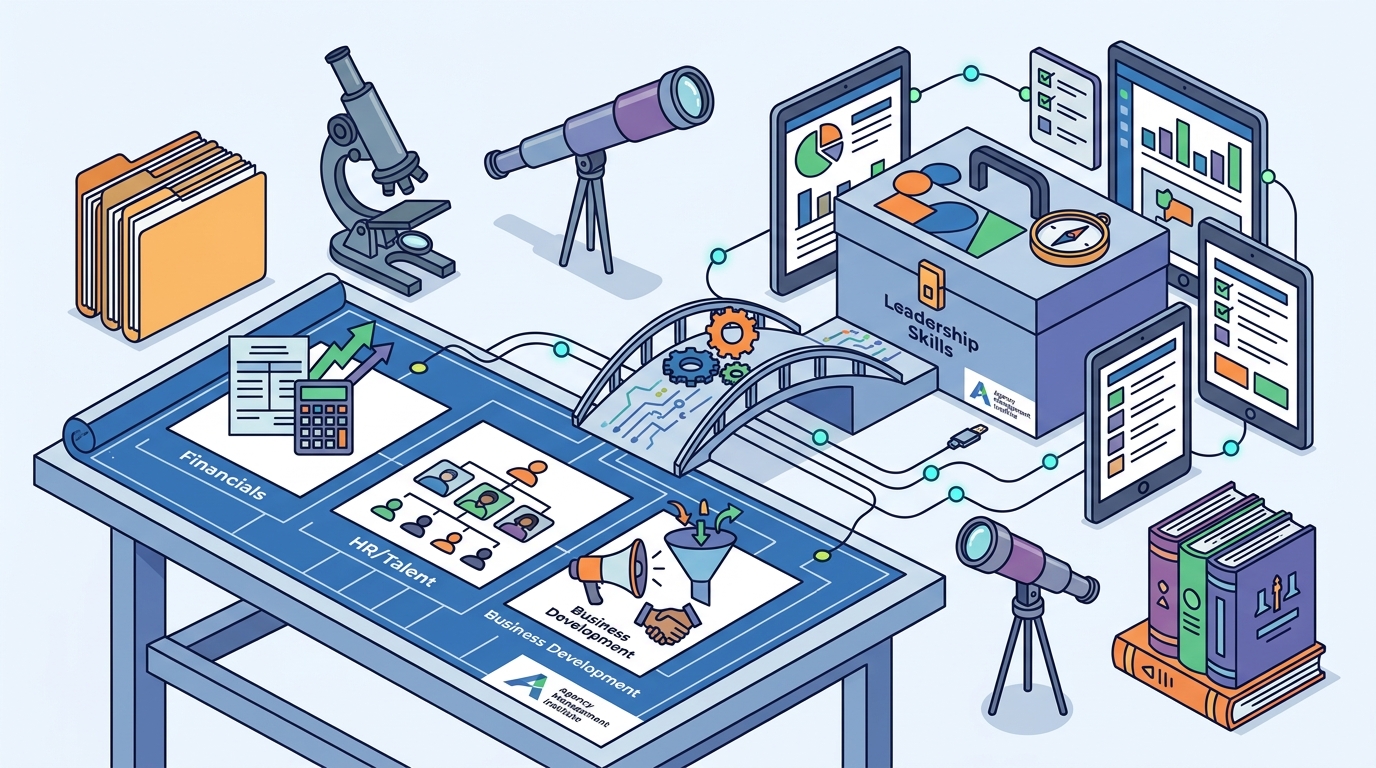
Advertising Agency Management Institute (AMI) was built in the late 90s on a simple premise, most agency owners are accidental business owners. Odds are you spent most of your professional career in an agency and somehow along the way, you ended up owning one. If you are like most agency owners, you are brilliant at the client-facing part of agency ownership but the behind-the-scenes side, including financials, HR, and business development, are not what you built your career on. To bridge this gap, effective leadership coaching is essential, but it requires the right digital infrastructure to scale. (Agency Owners Agency Management)
Why Leadership Coaching Matters for Accidental Owners
The transition from creative director or account manager to agency owner is a significant leap. According to industry research, a vast majority of agency leaders struggle with the operational aspects of business growth. This is where leadership coaching becomes a critical lever for success. It is not merely about advice; it is about structured development.
Leadership coaching is a collaborative process that helps agency owners identify blind spots, develop strategic thinking, and build sustainable business practices. Without the right tools, this process can become fragmented and inefficient. Tools provide the scaffolding for consistent progress, accountability, and measurable outcomes. They allow coaches and clients to move beyond sporadic conversations into a continuous loop of feedback and action.
For small to mid-sized agencies with 0 to 200 employees, the complexity of scaling is often underestimated. The tools you choose must support both the individual leader and the broader organizational culture. They must facilitate clear communication, track behavioral changes, and provide accessible resources for ongoing learning.
Core Tool Categories for Coaching
To streamline the coaching process, agencies should focus on integrating tools across four main categories: communication, assessment, knowledge management, and project tracking. Each category plays a distinct role in ensuring that coaching engagements deliver tangible value.
Communication Platforms
Effective coaching relies on consistent interaction. Video conferencing tools are the backbone of remote or hybrid coaching relationships. Platforms like Zoom or Microsoft Teams allow for face-to-face connection, which is vital for building trust and reading non-verbal cues. However, the best tools go beyond simple video calls.
Look for platforms that offer integrated scheduling, automated reminders, and secure file sharing. These features reduce administrative friction and allow the coach and client to focus entirely on the content of the session. Additionally, asynchronous communication tools can bridge the gap between live sessions, allowing for real-time updates and quick questions.
Assessment and Analytics Tools
Data-driven insights are crucial for effective coaching. Assessment tools help quantify leadership styles, team dynamics, and organizational health. These tools provide a baseline for measuring progress over time.
Common assessments include 360-degree feedback surveys, personality inventories, and emotional intelligence tests. The key is to choose tools that generate actionable reports. These reports should highlight strengths, areas for improvement, and specific behavioral recommendations. When integrated into the coaching workflow, they provide objective evidence of change and growth.
Knowledge Management Systems
Coaching is not just about the sessions; it is about the resources shared between them. Knowledge management systems serve as a central repository for coaching materials, action plans, and educational content. This ensures that insights are not lost and can be referenced repeatedly.
Effective knowledge management tools allow for easy organization, searchability, and access control. They should support various file types, including documents, videos, and audio recordings. This flexibility ensures that all stakeholders can engage with the material in their preferred format.
Project and Task Tracking
Accountability is a cornerstone of successful coaching. Project management tools help track action items, deadlines, and milestones related to the coaching goals. These tools provide visibility into progress and help identify potential bottlenecks early.
Simple task lists can be effective, but more sophisticated tools offer Gantt charts, Kanban boards, and automated notifications. These features help keep the coaching process on track and ensure that agreed-upon actions are completed. They also facilitate collaboration between the coach, the client, and other team members involved in the implementation.
Communication and Collaboration Platforms
Choosing the right communication platform depends on the specific needs of the agency and the coaching engagement. For many agencies, integrating coaching tools into their existing workflow is essential for adoption.
Slack and Microsoft Teams are popular choices for daily communication. They allow for quick check-ins, file sharing, and channel-based discussions. When used in conjunction with coaching platforms, they create a seamless experience for the client. For example, a coach can share a resource in Slack, and the client can immediately access it without leaving the conversation.
Video conferencing tools must be reliable and secure. Features like screen sharing, recording, and breakout rooms enhance the coaching experience. Recording sessions allows clients to review key points and share insights with their leadership team. This extends the value of the coaching beyond the individual.
Assessment and Analytics Tools
Assessment tools provide the quantitative backing for qualitative coaching conversations. They help identify patterns in behavior and decision-making that might otherwise go unnoticed. By using standardized assessments, coaches can ensure objectivity and consistency in their evaluations.
Popular assessment tools include DiSC, Myers-Briggs Type Indicator (MBTI), and Hogan Assessments. Each offers unique insights into leadership potential and risk. The choice of assessment should align with the coaching goals. For example, if the goal is to improve team dynamics, a 360-degree feedback tool might be more appropriate than a personality test.
Analytics dashboards can visualize assessment data over time. This allows for easy tracking of progress and identification of trends. Visual data is often more compelling and easier to understand than raw numbers, making it a powerful tool for demonstrating ROI to stakeholders.
Knowledge Management and Resource Hubs
A strong knowledge management system is the backbone of scalable coaching. It ensures that best practices, frameworks, and resources are easily accessible to all participants. This reduces the time spent searching for information and increases the time spent on high-value activities.
Platforms like Notion, Confluence, or even a well-structured SharePoint site can serve as effective knowledge hubs. They should be organized logically, with clear categories and tags. Search functionality is critical, as users need to find information quickly. Access controls ensure that sensitive coaching materials are only available to authorized individuals.
Integrating external resources, such as articles, podcasts, and webinars, into the knowledge hub adds value. It creates a comprehensive learning environment that supports continuous development. This is particularly important for agencies looking to foster a culture of learning and growth.
Tool Comparison Matrix
The following table compares common tools used in advertising agency leadership coaching. It highlights key features, ideal use cases, and integration capabilities.
| Tool Category | Example Tools | Key Feature | Ideal Use Case | Integration Level |
|---|---|---|---|---|
| Video Conferencing | Zoom, Microsoft Teams | Recording & Screen Sharing | Live coaching sessions | High |
| Communication | Slack, Discord | Channels & Threads | Asynchronous updates | Medium |
| Assessment | 15Five, Lattice | 360-Degree Feedback | Performance evaluation | High |
| Knowledge Management | Notion, Confluence | Search & Templates | Resource repository | Medium |
| Project Tracking | Asana, Trello | Kanban Boards | Action item tracking | High |
Key Takeaways
- Accidental Owners Need Structure: Most agency owners are creative or sales-focused, making operational tools critical for leadership development.
- Integration is Key: Tools that integrate with existing workflows see higher adoption rates among agency teams.
- Data Drives Accountability: Assessment and analytics tools provide objective measures of progress, enhancing the credibility of coaching.
- Knowledge Hubs Scale Impact: Centralized resource libraries ensure that coaching insights are accessible and reusable.
- AMI Provides Frameworks: Organizations like the Agency Management Institute offer specialized frameworks for agency owners.
- Continuous Learning: Coaching is an ongoing process, supported by tools that facilitate regular check-ins and resource sharing.
- ROI Measurement: Using analytics to track coaching outcomes helps demonstrate value to stakeholders and justify investment.
Frequently Asked Questions
What is the most important tool for agency leadership coaching?
There is no single most important tool, but communication platforms like Zoom or Microsoft Teams are foundational for maintaining the relationship. However, assessment tools provide the necessary data to drive meaningful change.
How can I measure the ROI of leadership coaching?
ROI can be measured by tracking key performance indicators such as revenue growth, employee retention, and client satisfaction. Assessment tools help quantify behavioral changes that contribute to these metrics.
Are there specific tools recommended for small agencies?
Small agencies often benefit from all-in-one platforms like Notion or Asana that combine knowledge management and project tracking. This reduces the need for multiple subscriptions and simplifies the workflow.
How do I choose the right assessment tool?
Choose an assessment tool that aligns with your coaching goals. If you need to understand team dynamics, opt for 360-degree feedback. If you need to understand individual leadership styles, consider personality inventories.
Can coaching tools be integrated with CRM systems?
Yes, many modern coaching tools integrate with CRM systems like Salesforce or HubSpot. This allows for a holistic view of client and team performance, linking coaching outcomes to business results.
What is the role of AI in agency leadership coaching?
AI can automate administrative tasks, provide real-time feedback, and analyze large datasets for insights. However, the human element of coaching remains irreplaceable for building trust and empathy.
How often should coaching sessions occur?
The frequency depends on the agency's needs and the coaching goals. Monthly sessions are common, but weekly or bi-weekly sessions may be necessary during critical transition periods.
Next Steps for Agency Leaders
Streamlining your leadership coaching process requires a strategic approach to tool selection and implementation. By focusing on communication, assessment, knowledge management, and project tracking, you can create a robust framework for growth. For agency owners seeking specialized guidance, exploring Advertising Agency Consulting can provide tailored insights. Additionally, participating in 2026 Webinars offers valuable updates on industry trends. To begin your journey toward more effective leadership, join the AMI community today and access exclusive resources and peer groups.