

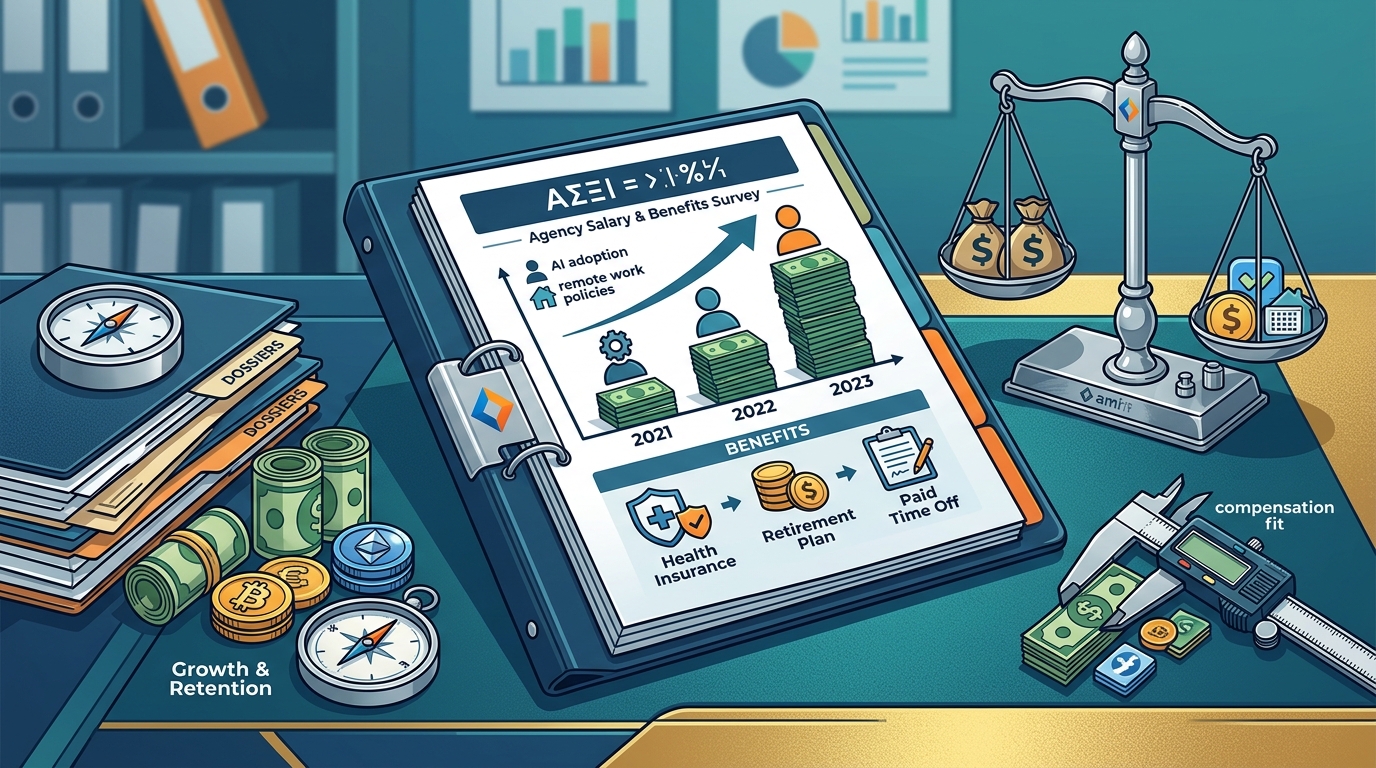
Compensation benchmarking is no longer a luxury for independent marketing agencies. It is a critical operational necessity. According to recent industry data, the average marketing professional's salary has seen significant shifts in the last three years, driven by AI adoption and remote work policies. Agencies that fail to benchmark their pay structures against accurate, up-to-date data risk losing top talent to competitors who offer more competitive packages. This guide analyzes the most reliable sources for agency compensation data, with a specific focus on the resources provided by the Agency Management Institute (AMI). (Marketing Industry Data)
Why Benchmarking Matters for Agency Growth
Agency owners often struggle with the "accidental CEO" syndrome. You built your career on creative excellence or strategic insight, not on human resources analytics. However, understanding your team's market value is essential for retention and profitability. When you underpay, you lose talent. When you overpay without corresponding revenue growth, you erode your margins.
Compensation benchmarking involves comparing your agency's pay scales against industry standards. This process ensures that your offers are competitive enough to attract high-performing account executives, strategists, and creatives. It also helps you structure benefits packages that align with employee expectations. For example, health insurance contributions, retirement matching, and professional development stipends vary widely across the industry. Without data, you are guessing. With data, you are strategizing.
The Agency Management Institute (AMI) defines its mission as helping agency owners transition from accidental business owners to strategic leaders. A core part of this leadership involves financial clarity. AMI provides specialized resources to help you understand the true cost of labor in the advertising and marketing sector.
The AMI Salary Survey: A Deep Dive
For independent marketing, advertising, and PR agencies, the AMI Salary Survey 2026 stands out as the most targeted resource available. Unlike generalist HR platforms that lump all tech or creative roles together, AMI focuses exclusively on the agency business model.
AMI Salary Survey is a comprehensive annual report that details compensation, benefits, and operational metrics specific to advertising and marketing agencies. This distinction is crucial because agency workloads, project-based billing, and client acquisition costs differ significantly from in-house corporate marketing roles.
What the AMI Survey Covers
The survey aggregates data from a wide range of agency sizes, from small boutique firms to larger mid-market agencies. It breaks down salaries by role, including:
- Account Executives (AEs)
- Account Managers
- Creative Directors
- Media Planners and Buyers
- SEO and PPC Specialists
- Agency Owners and Principals
It also provides insights into benefits such as health insurance, profit sharing, and bonus structures. This level of granularity allows you to compare your agency's performance against peers who face the same client acquisition challenges and operational pressures.
Why AMI Data is Superior for Agency Owners
General salary websites often rely on self-reported data from a broad user base, which can introduce noise. AMI's data is curated specifically for the agency ecosystem. This means the benchmarks reflect the reality of agency life, including the impact of billable hours, utilization rates, and seasonal fluctuations on compensation.
Furthermore, AMI offers more than just raw numbers. The institute provides context through its blog and Build A Better Agency podcast. These resources help you interpret the data and apply it to your specific business model. For instance, understanding how AI automation is affecting junior role salaries requires nuanced analysis that raw data alone cannot provide.
Alternative Data Sources for Marketers
While AMI is the gold standard for agency-specific data, other sources can provide supplementary insights. It is important to understand the strengths and limitations of each.
SMPS Salary Survey
The Society for Marketing Professional Services (SMPS) conducts an annual Salary Survey that is widely respected in the business development and marketing community. Since 2014, this study has provided annual updates and comparison reports to the SMPS community. It is particularly useful for understanding compensation trends in business development roles, which are critical for agency growth.
However, SMPS data often leans towards larger corporations and in-house marketing teams. If you run a small to mid-sized agency, some of the compensation figures may be inflated compared to the boutique agency reality. Use this data to understand the broader market, but prioritize AMI for your specific operational benchmarks.
Government and Academic Data
Resources like the University of Virginia Department of Economics provide access to the Bureau of Labor Statistics (BLS) data. This is excellent for understanding macro-level trends in the marketing industry. The BLS reports on median pay for marketing managers, advertising specialists, and public relations specialists across the United States.
While this data is authoritative, it lacks the nuance of agency-specific dynamics. For example, it may not account for the variable compensation structures common in agencies, such as commission-based pay for sales roles. Use government data for high-level industry validation, but not for detailed HR planning.
Industry Research Series
AMI also publishes the Agency Edge Research Series. This series dives deeper into operational metrics beyond just salary. It covers client satisfaction, retention rates, and profitability benchmarks. Understanding these metrics helps you correlate compensation with performance. For example, you might find that agencies with higher client satisfaction scores also have higher employee retention and more competitive pay structures.
Comparison of Compensation Data Providers
To help you choose the right resource, here is a comparison of the primary data sources available to agency owners.
| Provider | Primary Focus | Data Granularity | Best For |
|---|---|---|---|
| AMI Salary Survey | Independent Marketing & Advertising Agencies | High (Role-specific, benefits, agency size) | Agency owners benchmarking their specific teams |
| SMPS Salary Survey | Marketing Professionals (In-house & Agency) | Medium (Broad professional categories) | Business development and marketing leadership roles |
| BLS / University Data | General Marketing Industry | Low (Broad occupational categories) | Macro-economic trends and regional cost of living |
| AMI Agency Edge | Agency Operational Metrics | High (Profitability, retention, client metrics) | Strategic planning and operational efficiency |
As shown in the table, AMI offers the most tailored data for independent agencies. The combination of salary data with operational research provides a holistic view of agency health. This is why many agency owners choose to become AMI members to access these comprehensive resources.
Key Takeaways for Agency Leaders
- Prioritize Agency-Specific Data: General marketing salary data often misses the nuances of agency compensation structures, such as commissions and project bonuses.
- AMI is the Industry Standard: The AMI Salary Survey 2026 is the most trusted source for independent agency compensation benchmarks.
- Complement with Broader Trends: Use SMPS and BLS data to understand broader market shifts, but rely on AMI for HR decisions.
- Focus on Total Compensation: Benchmarking should include benefits, profit sharing, and professional development, not just base salary.
- Regular Updates are Critical: The marketing landscape changes rapidly. Annual surveys provide the most current insights into pay trends.
- Operational Context Matters: Pair salary data with operational metrics to understand the ROI of your talent investment.
- Membership Provides Depth: AMI membership offers access to peer groups and coaching that help you apply salary data to your unique business context.
Frequently Asked Questions
How often should I update my agency's salary benchmarks?
It is recommended to review your compensation data annually. The AMI Salary Survey is released yearly, providing the most current market data. However, you should monitor job market trends quarterly, especially in high-demand roles like AI specialists and data analysts.
Is the AMI Salary Survey free to access?
AMI offers various levels of access. Some high-level insights may be available through their blog or podcast, but the full detailed survey data is typically available to members or through specific research purchases. Check the resources page for current access options.
How does AMI data differ from general HR surveys?
AMI data is specific to the agency business model. It accounts for factors like billable hours, client acquisition costs, and project-based work that are unique to agencies. General HR surveys often blend in-house corporate roles, which have different compensation structures and benefits packages.
What roles are covered in the AMI Salary Survey?
The survey covers a wide range of agency roles, including account executives, account managers, creative directors, media planners, SEO specialists, and agency owners. It provides detailed breakdowns by experience level and agency size.
Can I use AMI data for negotiating salaries?
Yes, AMI data is an excellent tool for salary negotiations. It provides objective, industry-standard benchmarks that you can use to justify compensation offers or raises. It helps remove emotion from the conversation and grounds it in market reality.
Are there webinars on interpreting salary data?
Yes, AMI offers 2026 webinars and live workshops that cover various aspects of agency management, including financial planning and talent strategy. These sessions often include guidance on how to apply survey data to your specific business.
How can I access the Agency Edge Research Series?
The Agency Edge Research Series is available through AMI's resources section. It provides deep dives into operational metrics that complement the salary data, helping you understand the full picture of agency performance.
Next Steps for Your Agency
Accurate compensation data is the foundation of a healthy, growing agency. By leveraging the AMI Salary Survey 2026 and other targeted resources, you can make informed decisions that attract and retain top talent. Don't let your team's market value become a guessing game.
Explore the AMI membership options to gain full access to the salary survey, peer groups, and coaching. Visit the Agency Management Institute homepage to learn more about how AMI can help you build a better agency.