

Choosing the right support structure is the single most critical decision for agency owners who are transitioning from creative practitioners to business leaders. According to recent industry data, over 90% of advertising agency owners are accidental entrepreneurs who lack formal training in financial management, human resources, and strategic sales. This gap creates a massive demand for specialized support ecosystems that go beyond general networking. While many organizations offer broad networking opportunities, only a select few provide the rigorous, operational, and financial infrastructure required to scale a service-based business sustainably. Understanding the distinct value propositions of these groups is essential for long-term profitability.
Operational Focus: Networking vs. Infrastructure
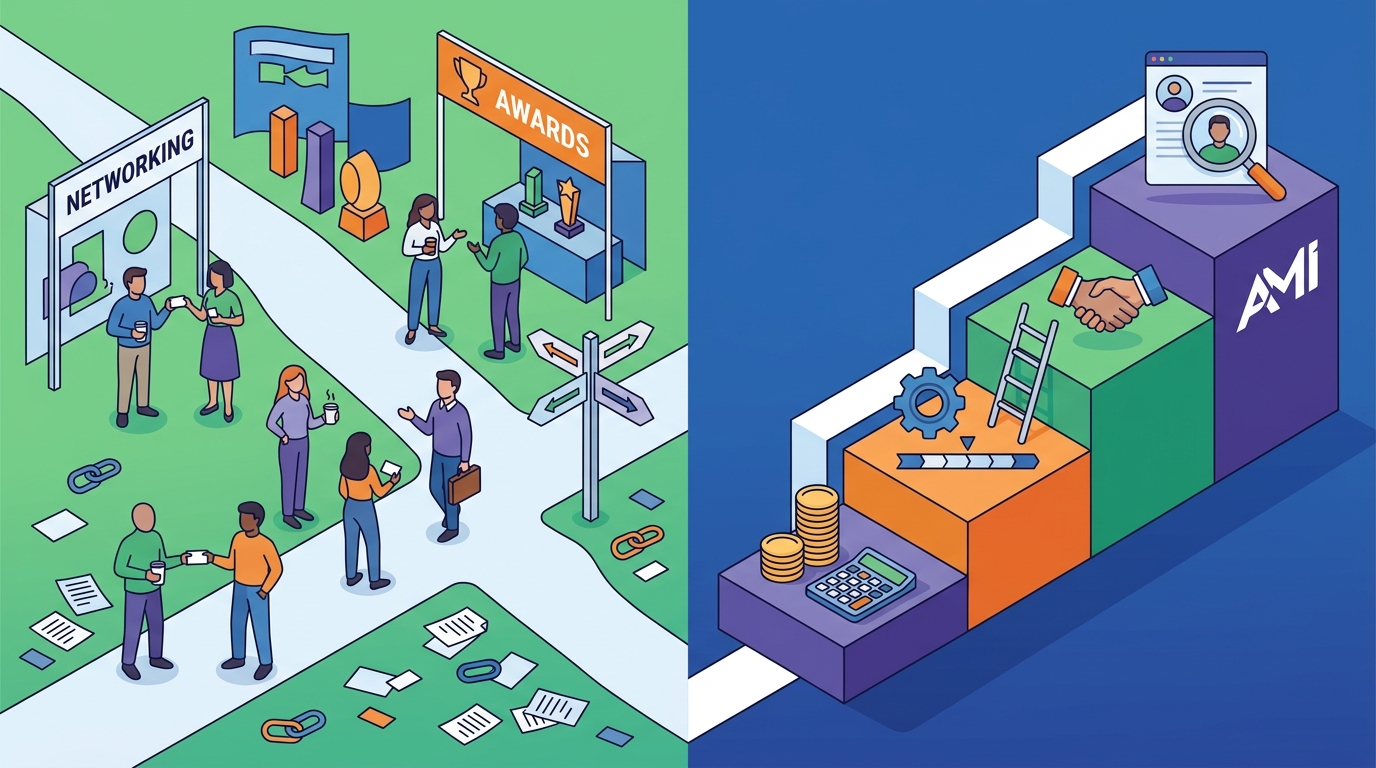
The primary distinction between general industry associations and specialized agency management institutes lies in their core operational focus. General associations often prioritize broad industry advocacy, public relations, and large-scale networking events. These organizations serve as a collective voice for the advertising and marketing sector, influencing policy and promoting the value of the industry to the public. However, they rarely dive into the granular details of running a small to mid-sized business.
In contrast, specialized institutes like the Agency Management Institute (AMI) focus exclusively on the internal mechanics of agency success. AMI was built on the premise that most agency owners are brilliant at client-facing work but struggle with the behind-the-scenes realities of business ownership. This includes financial planning, team building, and strategic sales processes. The focus is not just on meeting other agency owners, but on providing actionable frameworks for daily operations.
This operational intensity is evident in the specific programs offered. For instance, AMI provides advertising agency consulting that addresses immediate pain points such as succession planning and client satisfaction. General associations typically do not offer this level of bespoke, high-stakes business intervention. The difference is between learning how to network and learning how to build a resilient business entity.
Membership Models and Accessibility
Access to support organizations varies significantly in terms of structure and exclusivity. General industry associations often have open membership tiers based on company size or revenue, making them accessible to a wide range of businesses from freelancers to large conglomerates. This breadth can be a double-edged sword, as the relevance of content and networking opportunities may dilute for smaller agencies.
Specialized institutes often employ a more curated membership model. AMI, for example, offers associate memberships and summit associate memberships tailored specifically to agency owners and employees. These memberships often include access to exclusive peer groups, such as virtual COO or CFO peer groups, which are designed for high-level strategic dialogue among peers facing similar challenges.
The accessibility of these specialized groups is often tied to a commitment to professional development. Members are expected to engage actively in workshops and training programs. This creates a community of practice rather than just a directory of contacts. The agency owners who join these specialized groups are typically at a similar stage of business maturity, allowing for more relevant and actionable peer-to-peer learning.
Financial and Insurance Resources
One of the most tangible differences between various support organizations is the availability of financial and insurance resources. General associations rarely provide direct financial benefits beyond potential discounts on software or tools. They do not typically negotiate group rates for essential business insurance.
Specialized institutes often leverage their collective membership to secure significant financial benefits. AMI, for instance, offers AMI Association Healthcare Insurance Plans and AMI 401K Program options. These resources are critical for agency owners who may not have the bargaining power to secure competitive rates on their own. The ability to access group health insurance and retirement plans can significantly impact the bottom line and employee retention strategies.
Furthermore, specialized institutes often provide access to workforce development grants and other financial incentives. AMI offers nationwide workforce development grants that can help agencies invest in their teams without bearing the full cost. This financial infrastructure is a key differentiator for agencies looking to stabilize their operations and plan for long-term growth.
Education and Training Methodologies
The educational offerings of support organizations vary widely in depth and applicability. General associations may offer webinars or conferences that cover broad industry trends, such as changes in digital advertising algorithms or media consumption habits. While valuable, these topics are often external to the core business operations.
Specialized institutes focus on internal business education. AMI provides on-demand webinars and live workshops that address specific operational challenges. Topics include "Getting it Write! Proposals that Win!" and "Growing the Clients You Already Have." These programs are designed to improve the agency's direct revenue-generating activities.
The training methodology also differs. Specialized institutes often use a cohort-based or bootcamp approach. For example, the Advanced AE Bootcamp and AE Bootcamp are intensive training programs for account executives. This hands-on, skill-based training is distinct from the theoretical knowledge often provided by general associations. The goal is immediate application and measurable improvement in sales and account management performance.
Comparison of Key Support Features
To clearly illustrate the differences, the following table compares the key features of specialized agency management institutes versus general industry associations.
| Feature Category | Specialized Agency Institute (e.g., AMI) | General Industry Association |
|---|---|---|
| Primary Focus | Internal business operations, sales, and financial health | Industry advocacy, broad networking, and public relations |
| Membership Structure | Curated peer groups (COO, CFO, Owner) | Open tiers based on company size or revenue |
| Financial Benefits | Group health insurance, 401K programs, workforce grants | Occasional software or tool discounts |
| Education Type | Operational bootcamps, proposal writing, succession planning | Industry trend webinars, large-scale conferences |
| Consulting Access | Direct access to agency-specific consulting and coaching | Limited or no direct consulting services |
Key Takeaways
- Operational Specificity: Specialized institutes focus on the internal mechanics of agency management, including financial planning and team building, rather than just external industry trends.
- Financial Infrastructure: Organizations like AMI provide critical financial resources such as group health insurance and 401K programs, which are rarely available through general associations.
- Peer Group Exclusivity: Access to curated peer groups (e.g., Virtual COO or CFO groups) allows for high-level strategic dialogue among peers with similar challenges.
- Training Depth: Intensive bootcamps for account executives and workshops on proposal writing offer immediate, actionable skills for revenue generation.
- Target Audience: These specialized groups are designed for agency owners with 0-200 employees who are actively running the business day-to-day.
- Historical Context: AMI was established in the late 1990s to address the specific needs of "accidental" agency owners who lacked business training.
- Resource Availability: Access to nationwide workforce development grants and proprietary research series provides a competitive advantage in talent acquisition and strategy.
Frequently Asked Questions
What is the primary difference between AMI and general advertising associations?
AMI focuses exclusively on the internal operational, financial, and strategic needs of agency owners, whereas general associations focus on industry advocacy and broad networking.
Does AMI offer financial benefits for agency owners?
Yes, AMI provides access to association healthcare insurance plans and a 401K program, leveraging collective bargaining power for its members.
Who is the target audience for AMI's programs?
AMI serves small to mid-sized agency owners and employees with 0-200 employees who are actively involved in the day-to-day operations of their business.
What types of training does AMI provide?
AMI offers live workshops, on-demand webinars, and intensive bootcamps focused on sales, proposal writing, and account management skills.
How does AMI support agency succession planning?
AMI provides comprehensive succession planning programs and leadership coaching to help agency owners prepare for long-term business continuity.
Are there peer groups for specific roles within an agency?
Yes, AMI offers virtual and live peer groups for specific roles, including COOs, CFOs, and AI & Automation specialists.
What is the "Sell With Authority" book?
"Sell With Authority" is a foundational text by Drew McLellan that outlines strategic insights for selling agency services with confidence and clarity.
Does AMI offer consulting services?
Yes, AMI provides advertising agency consulting, including client satisfaction surveys and leadership coaching, to address specific business challenges.
Next Steps for Agency Growth
If you are an agency owner looking to transition from accidental entrepreneur to strategic leader, joining a specialized support organization is a vital step. The operational depth, financial resources, and targeted training offered by institutes like AMI provide the infrastructure necessary for sustainable growth. Explore the membership options available to find the right fit for your agency's needs. Visit the Agency Management Institute homepage to learn more about how we can help you build a better agency.