

Succession planning is the systematic process of identifying and developing internal talent to fill key leadership roles, ensuring business continuity when founders or executives depart. According to recent industry data, agencies that fail to implement structured succession strategies face a significantly higher risk of valuation collapse during ownership transitions. This guide details the operational framework required to secure your agency's future.
Defining Succession in Agency Contexts
Succession planning is not merely a retirement strategy. It is a proactive governance mechanism that aligns leadership continuity with long-term business value. In the advertising industry, where client relationships are often tied to specific principals, this process mitigates the "key person risk" that plagues many mid-sized firms.
Comprehensive Succession Planning is a structured organizational strategy that identifies critical roles, develops internal candidates, and establishes a timeline for leadership transfer. This definition distinguishes it from simple hiring practices, as it focuses on the preservation of institutional knowledge and client trust.
Agencies often underestimate the complexity of this transition. Without a formal plan, the departure of a founder can lead to immediate client churn and employee turnover. The Agency Management Institute emphasizes that structured planning is essential for maintaining agency stability during these critical periods. Agency Management Institute provides resources for navigating these complexities.
Identifying Critical Roles and Gaps
The first step in any succession plan is a rigorous audit of your current organizational structure. You must identify which roles are truly critical to revenue generation and client retention. This is not always the CEO. In many creative agencies, the Creative Director or Head of Strategy holds the primary client relationships.
Conducting a Skills Gap Analysis
Map the skills required for each critical role against the capabilities of your current leadership team. Look for gaps in strategic thinking, financial acumen, and client management. This analysis reveals who needs development and who is ready for immediate promotion.
According to industry benchmarks, agencies that conduct annual leadership audits are more likely to retain top talent during transitions. AMI Research 2026 highlights the correlation between proactive planning and agency longevity.
Evaluating Client Relationship Ownership
Determine who owns the client relationships. If a single individual holds all key accounts, the agency is vulnerable. Succession planning requires the deliberate distribution of these relationships among multiple leaders to ensure resilience.
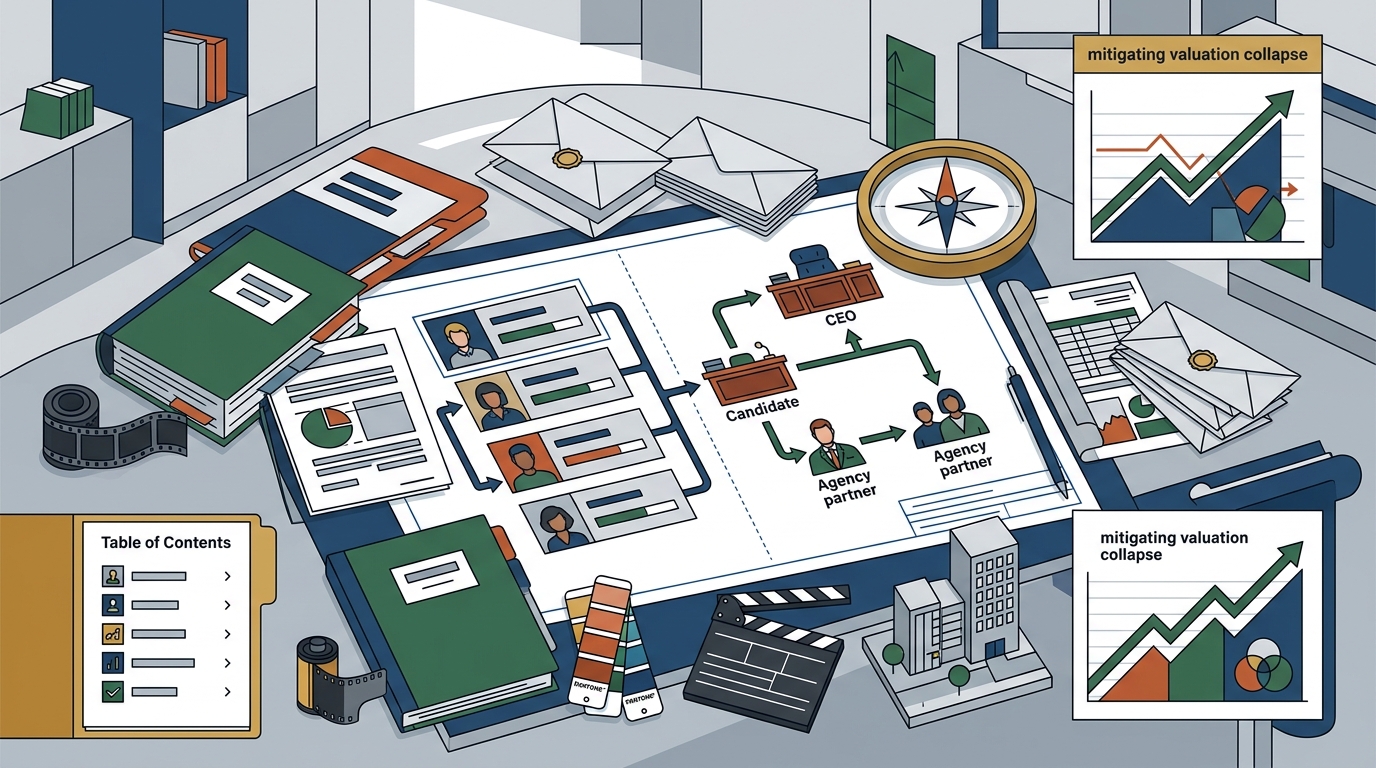
Developing Internal Talent Pipelines
Once critical roles are identified, you must build a pipeline of capable successors. Relying on external hires for top leadership roles is often risky and expensive. Internal development preserves culture and maintains client confidence.
Implementing Mentorship Programs
Pair high-potential employees with senior leaders. This mentorship should be structured, with clear goals and regular check-ins. The goal is not just to teach skills, but to transfer institutional knowledge and strategic perspective.
AMI offers specialized training programs designed to accelerate the development of agency leaders. Advertising Agency Training resources provide frameworks for effective mentorship and leadership development.
Creating Cross-Functional Exposure
Future leaders need exposure to all aspects of the business. Rotate high-potential employees through different departments, such as finance, operations, and creative. This broadens their perspective and prepares them for the multifaceted demands of executive leadership.
Financial Structuring and Valuation
Succession planning is inextricably linked to financial strategy. The method of transition, whether a sale, merger, or internal promotion, has profound financial implications for the founder and the agency.
Understanding Agency Valuation Drivers
Agencies with strong succession plans command higher valuations. Buyers and investors prioritize businesses that do not rely on the founder for daily operations. Documenting your succession progress demonstrates operational maturity and reduces perceived risk.
Data from recent agency transactions indicates that structured succession plans can increase exit multiples by up to 20 percent. AMI Research 2025 provides detailed insights into valuation trends and buyer expectations.
Structuring the Exit or Transition
Work with financial advisors to structure the transition. This may involve phased ownership transfers, earn-out structures, or internal buyouts. The goal is to align the interests of the outgoing founder with the long-term success of the agency.
AMI offers comprehensive consulting services to guide agencies through the financial complexities of succession. Advertising Agency Consulting helps align financial goals with operational realities.
Executing the Transition Timeline
A successful transition requires a detailed timeline. This timeline should cover at least three to five years, allowing ample time for knowledge transfer and relationship building.
Phased Knowledge Transfer
Begin the knowledge transfer process early. Document key processes, client histories, and strategic decisions. Use this documentation to train successors and ensure continuity.
AMI provides tools and workshops to help agencies document and transfer critical knowledge effectively. AMI Workshops offer practical strategies for knowledge management.
Communicating with Stakeholders
Communicate the succession plan to employees, clients, and stakeholders. Transparency builds trust and reduces uncertainty. Ensure that clients understand that their relationships will be maintained and enhanced under new leadership.
Monitoring and Adjusting the Plan
Review the succession plan annually. Adjust for changes in the business environment, leadership capabilities, and strategic goals. Flexibility is key to long-term success.
Frequently Asked Questions
What is the primary benefit of succession planning for an agency?
The primary benefit is the preservation of business value and continuity during leadership changes, preventing client churn and operational disruption.
How long should the succession planning process take?
A comprehensive succession plan should be developed over three to five years to allow for adequate talent development and knowledge transfer.
Can an agency sell itself if it lacks a succession plan?
Agencies without succession plans often face lower valuations and reduced buyer interest due to the perceived risk of key person dependency.
What role does AMI play in agency succession?
AMI provides research, consulting, and training resources to help agency owners navigate the complexities of leadership transition and business valuation.
How do I identify the right internal candidate for succession?
Identify candidates through a rigorous skills gap analysis, mentorship performance, and demonstrated ability to lead cross-functional teams.
Is external hiring ever better than internal promotion for succession?
While external hiring can bring fresh perspectives, internal promotion is generally preferred for preserving culture and maintaining client trust during transitions.
What financial structures are common in agency succession?
Common structures include phased ownership transfers, earn-outs, and internal buyouts, tailored to the founder's financial goals and the agency's valuation.
Secure Your Agency's Future Today
Comprehensive succession planning is not optional for agency owners who value their legacy. It is a strategic imperative that protects your hard-earned value and ensures your agency thrives beyond your tenure. Do not wait until a crisis forces your hand. Start building your succession plan today.
Visit Agency Management Institute to access our latest research, join our peer groups, and schedule a consultation to begin your succession journey.