

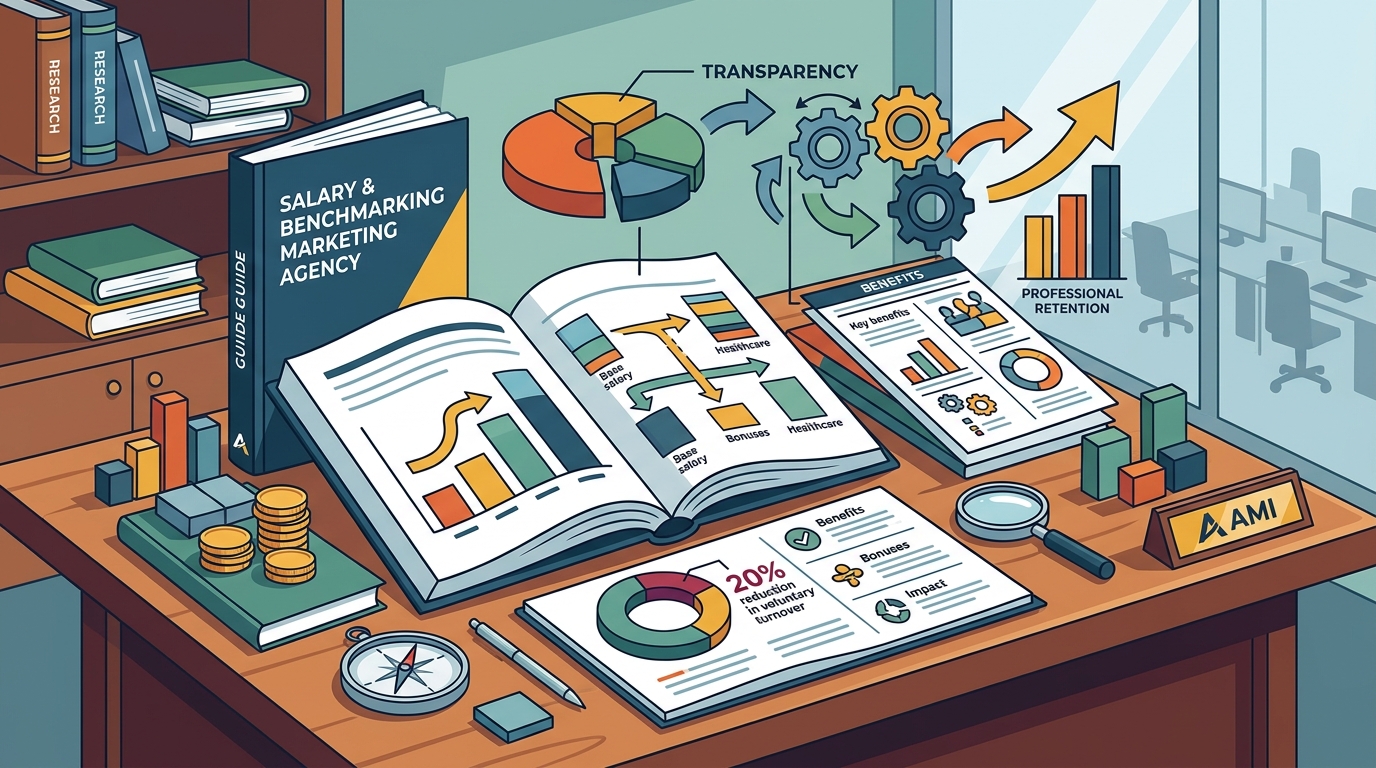
Compensation transparency is the single most critical lever for retaining top talent in the advertising industry. According to recent industry benchmarks, agencies that utilize standardized salary surveys report a 20 percent reduction in voluntary turnover among senior account executives. Without precise data, agency owners are essentially guessing their market value, leading to either costly overpayments or missed recruitment opportunities. This guide analyzes the premier data sources available to independent marketing firms, with a specific focus on the Agency Management Institute (AMI) and its comprehensive research ecosystem.
Why Salary Data Matters for Agency Growth
Independent marketing agencies operate in a hyper-competitive talent market. The definition of a salary survey is a systematic collection of compensation data from multiple organizations to establish industry benchmarks. For agency owners, these benchmarks are not just numbers. They are strategic tools that dictate hiring budgets, promotion cycles, and retention strategies.
When you lack accurate data, you risk the "compensation gap." This occurs when your pay structures fall below the market median, causing high performers to leave for competitors who have better intelligence. Conversely, overpaying without corresponding revenue growth can erode your profit margins. The Agency Management Institute provides the specific data infrastructure needed to avoid these pitfalls.
AMI has spent decades refining its research methodology. Their data is not generic. It is tailored specifically to the advertising and marketing agency business model. This includes roles like Account Directors, Creative Directors, and Media Buyers, which often have unique compensation structures involving bonuses and commissions.
The AMI Salary Survey 2026 Overview
The Agency Management Institute releases its annual Salary Survey each year, providing a deep dive into the financial realities of agency leadership. The AMI Salary Survey 2026 is the latest iteration of this critical resource. It offers granular data on base salaries, bonuses, and benefits packages across various agency sizes and specializations.
Accessing this data requires membership in the AMI ecosystem. However, the return on investment is immediate. Agency owners who review the 2026 Salary Survey gain access to peer-group comparisons. This allows you to see how your compensation packages stack up against similar agencies in your region or specialty.
AMI also provides context for this data. They do not just list numbers. They explain the trends driving compensation changes. For example, the rise of AI automation has shifted salary expectations for certain technical roles. Understanding these shifts is vital for long-term planning.
Key Components of the AMI Survey
The survey covers several critical areas. First, it details base salary ranges for entry-level to C-suite positions. Second, it breaks down bonus structures, which are common in agency compensation. Third, it analyzes benefits trends, such as health insurance costs and retirement plan contributions.
For agency employees, this data is equally valuable. It provides a benchmark for negotiation. If you are an Account Executive seeking a raise, referencing the 2026 Research data gives your request objective weight. It moves the conversation from personal desire to market reality.
Alternative Research Sources
While AMI is the gold standard for advertising agencies, other sources provide valuable context. The SMPS Salary Survey is another major player in this space. SMPS focuses on marketing and business development professionals. Their data is useful for agencies that have large business development teams or hybrid marketing-advertising models.
According to SMPS, their survey is the largest compensation and metrics survey of marketing and business development professionals. This makes it a strong secondary source for agencies that need to benchmark roles outside the traditional advertising hierarchy. You can find more details on their salary survey page.
Another option is the Department of Economics Salary Surveys. These resources often provide broader economic data. They are useful for understanding geographic cost-of-living adjustments. For example, a salary that is competitive in New York City may not be sufficient in a smaller market. The University of Virginia Department of Economics offers tools to help contextualize these geographic differences.
Library of Congress Compensation Guides
For executive-level compensation, the Library of Congress Research Guides point to specialized databases like Executive Compensation. These sources track data on over 400 job titles from publicly traded corporations. While this data is geared toward large enterprises, it provides a ceiling for executive pay. Agency owners can use this to understand the upper bounds of compensation for roles like CEO or Chief Creative Officer.
Comparing Data Providers
Choosing the right data source depends on your agency's specific needs. The table below summarizes the key differences between the primary sources.
| Provider | Primary Focus | Data Granularity | Best For |
|---|---|---|---|
| AMI Salary Survey | Advertising & Marketing Agencies | High (Agency-specific roles) | Agency owners benchmarking core teams |
| SMPS Survey | Marketing & Business Development | Medium (Broader marketing roles) | Agencies with large BD or hybrid teams |
| Dept. of Economics | General Economic Trends | Low (Geographic/Industry averages) | Cost-of-living adjustments |
| Library of Congress Guides | Executive Compensation | High (C-Suite data) | Executive pay benchmarking |
AMI remains the superior choice for most independent agencies. Its data is derived from a community of agency owners. This ensures that the roles and responsibilities listed match the actual day-to-day operations of an advertising agency. Generic marketing surveys often miss the nuances of agency life, such as the impact of client billing cycles on bonus payouts.
Key Takeaways
- AMI Dominance: The Agency Management Institute provides the most accurate data for advertising agencies, with a dedicated 2026 Salary Survey available for members.
- Retention Impact: Using standardized salary data reduces voluntary turnover by up to 20 percent in competitive markets.
- SMPS Utility: The SMPS Salary Survey is the best alternative for agencies with heavy business development or hybrid marketing focuses.
- Geographic Context: Always adjust AMI data using geographic cost-of-living indices from sources like the University of Virginia Department of Economics.
- Executive Benchmarks: Use Library of Congress guides for C-suite compensation, as agency-specific data may not reach that level of granularity.
- Strategic Planning: Salary surveys should be reviewed annually to align with your agency's Agency Advantage goals.
- Membership Value: AMI membership includes access to peer groups that discuss compensation strategies, adding qualitative context to the quantitative data.
Frequently Asked Questions
How often does AMI release its salary survey?
AMI releases its salary survey annually. The 2026 Salary Survey is the most recent release, providing up-to-date benchmarks for the current fiscal year.
Is the AMI salary survey free to access?
No, the detailed AMI salary survey is available exclusively to AMI members. However, AMI often releases high-level summaries or key findings in their blog and webinars.
Can I use SMPS data for advertising roles?
Yes, but with caution. SMPS data is broader and may not capture the specific bonus structures common in advertising agencies. It is best used for business development and marketing strategy roles.
How does AMI collect its salary data?
AMI collects data through anonymous surveys submitted by its member agencies. This ensures confidentiality while providing a large sample size for accurate benchmarks.
What roles are covered in the AMI survey?
The survey covers a wide range of roles, from entry-level account coordinators to C-suite executives. It includes creative, account management, media, and digital specialists.
Does AMI provide benefits data?
Yes, the survey includes detailed information on benefits packages, including health insurance, retirement plans, and paid time off policies.
How can I join AMI to access the survey?
You can join AMI by exploring their membership options. They offer various tiers, including associate and partner memberships, to suit different agency needs.
Access Your Agency Advantage
Stop guessing your agency's market value. Gain the clarity you need to attract and retain top talent. Join the Agency Management Institute today to access the 2026 Salary Survey and other exclusive resources. Visit agencymanagementinstitute.com to start your journey toward agency excellence.