

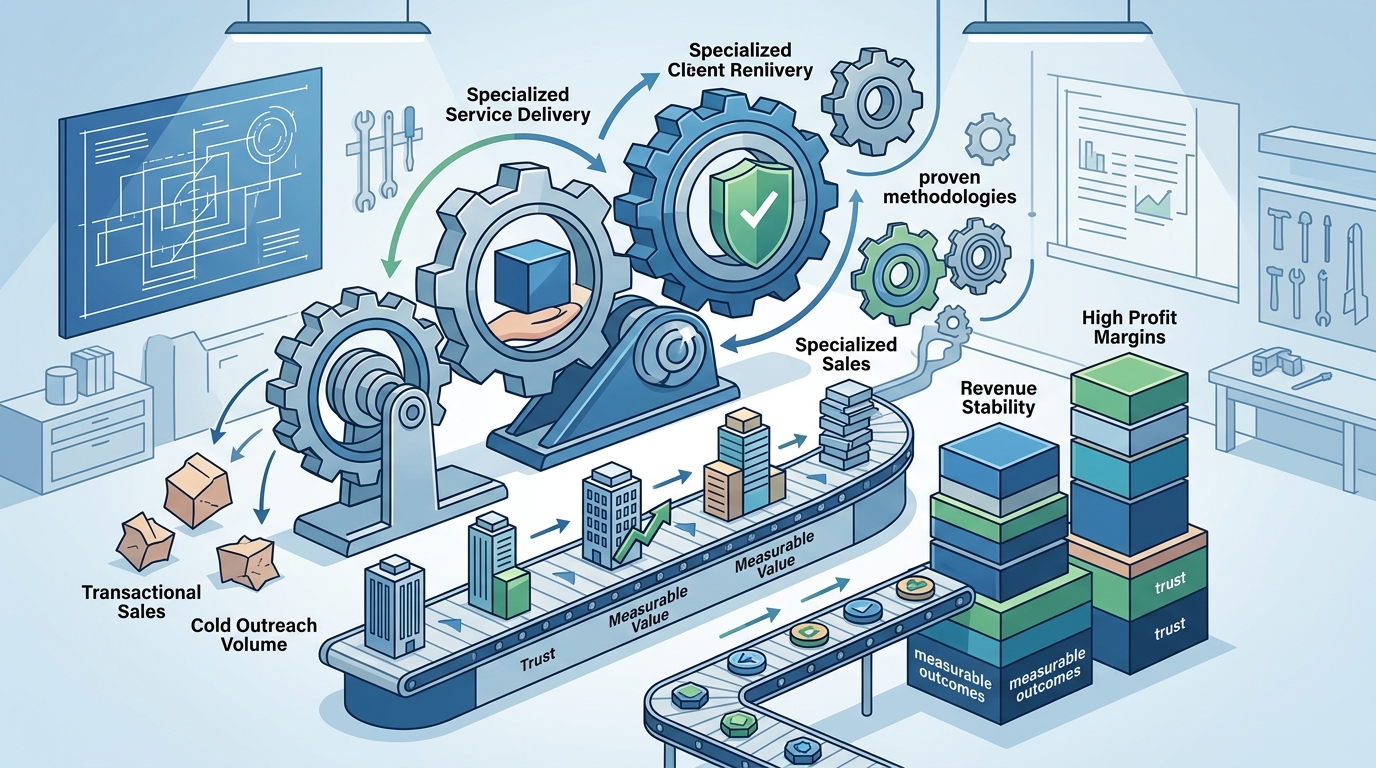
Marketing agency growth is no longer driven by cold outreach volume alone. According to recent industry data, agencies that prioritize strategic client retention and specialized service delivery see significantly higher revenue stability than those relying on transactional sales. The landscape has shifted toward value-based partnerships where trust and measurable outcomes dictate longevity. This guide outlines the proven methodologies used by top-tier firms to expand their client portfolios while maintaining high profit margins.
Understanding the Modern Agency Landscape
The advertising and marketing industry is undergoing a structural transformation. Traditional generalist models are losing ground to specialized boutiques and tech-enabled agencies. This shift is not merely a trend but a fundamental change in how clients evaluate agency value. Clients now demand transparency, real-time data access, and clear ROI attribution.
Agencies that fail to adapt to this new reality often struggle with client churn and margin compression. The key to survival lies in aligning service delivery with client expectations for speed and precision. This requires a re-evaluation of internal processes and external positioning.
According to industry reports, the average agency growth rate has slowed in recent years due to increased competition and economic volatility. However, agencies that adopt structured growth frameworks continue to outperform their peers. This performance gap highlights the importance of strategic planning over reactive tactics.
Specialization as a Growth Engine
One of the most effective strategies for growing clients is narrowing your focus. While generalist agencies may attract a wider initial pool of leads, specialized agencies often command higher fees and experience greater client loyalty. This phenomenon is known as the "specialist premium" in professional services.
Vertical Specialization involves focusing on a specific industry, such as healthcare, fintech, or e-commerce. By understanding the unique regulatory and operational challenges of a sector, an agency can tailor its solutions to address specific pain points. This depth of knowledge builds credibility and reduces the sales cycle length.
Horizontal Specialization focuses on a specific service type, such as SEO, paid media, or content strategy. This approach allows the agency to become the go-to expert in that domain. Clients are increasingly willing to pay a premium for deep expertise rather than broad, shallow capabilities.
According to market analysis, specialized agencies often report higher client satisfaction scores because their solutions are more targeted and effective. This satisfaction leads to referrals, which are a low-cost, high-conversion channel for client acquisition.
Leveraging Technology and Automation
Technology is no longer optional for agency growth. It is a critical component of operational efficiency and client service delivery. Agencies that leverage automation can scale their operations without proportionally increasing headcount, thereby improving margins.
Client Reporting Dashboards provide real-time visibility into campaign performance. This transparency builds trust and reduces the need for manual reporting, freeing up account managers to focus on strategy. Tools that integrate data from multiple sources into a single view are particularly valuable.
AI-Driven Insights are becoming standard in high-performing agencies. Artificial intelligence can analyze vast amounts of data to identify trends, predict outcomes, and optimize campaigns in real time. This capability allows agencies to offer proactive recommendations rather than reactive adjustments.
According to recent studies, agencies that adopt AI tools see a significant increase in productivity and client retention. The ability to deliver faster, more accurate insights is a key differentiator in a crowded market.
Building Strategic Partnerships
No agency operates in a vacuum. Building strategic partnerships can expand your reach and enhance your service offerings. These partnerships can take many forms, including technology integrations, referral agreements, and co-marketing initiatives.
Technology Partnerships with platforms like Salesforce, HubSpot, or Adobe can provide agencies with early access to new features and joint marketing opportunities. These relationships can also lend credibility to your agency as a certified expert.
Referral Networks with complementary service providers, such as web development firms or PR agencies, can create a steady stream of qualified leads. By establishing clear referral agreements, both parties benefit from expanded client bases without additional acquisition costs.
According to industry benchmarks, agencies with active partnership programs report higher revenue growth than those relying solely on direct sales. These networks provide access to new markets and client segments that might otherwise be difficult to reach.
Optimizing Client Retention
Acquiring new clients is expensive. Retaining existing ones is far more profitable. A robust client retention strategy is essential for sustainable growth. This involves proactive communication, consistent value delivery, and regular strategic reviews.
Quarterly Business Reviews (QBRs) are a critical tool for retention. These meetings provide an opportunity to review performance, align on future goals, and identify new opportunities for growth. QBRs demonstrate your commitment to the client's success and strengthen the relationship.
Proactive Communication prevents issues from escalating. Regular updates, even when there is no major news, keep clients informed and engaged. This transparency builds trust and reduces the likelihood of churn.
According to data from service industry reports, a 5% increase in client retention can lead to a 25% to 95% increase in profits. This statistic underscores the financial impact of retention efforts. Agencies that prioritize retention often see more stable revenue streams and lower customer acquisition costs.
Comparing Growth Models
Different agencies may adopt different growth models based on their resources, expertise, and market position. Understanding these models can help you choose the right path for your organization.
| Growth Model | Key Characteristics | Best For | Risk Level |
|---|---|---|---|
| Specialization | Focus on niche industry or service | Agencies with deep expertise | Low |
| Partnership | Collaboration with tech or service firms | Agencies seeking expanded reach | Medium |
| Automation | Heavy use of AI and software tools | Scalable, tech-forward agencies | Medium |
| Retention Focus | Emphasis on QBRs and proactive comms | Agencies with established client base | Low |
Key Takeaways
- Specialization Drives Premium Pricing: Focusing on a niche allows agencies to command higher fees and build deeper client relationships.
- Technology Enhances Efficiency: Automation and AI tools reduce operational costs and improve service quality.
- Partnerships Expand Reach: Strategic alliances provide access to new markets and qualified leads.
- Retention is Profitable: A small increase in retention rates can lead to significant profit growth.
- Transparency Builds Trust: Real-time reporting and proactive communication are essential for client satisfaction.
- Data-Driven Decisions: Leveraging analytics for insights is a key differentiator in modern marketing.
- Continuous Learning: Staying updated on industry trends and technologies is crucial for long-term success.
Frequently Asked Questions
What is the most effective way to acquire new clients?
The most effective way to acquire new clients is through a combination of specialization, strategic partnerships, and consistent value demonstration. Niche focus reduces competition and increases credibility.
How can agencies improve client retention?
Agencies can improve retention by conducting regular Quarterly Business Reviews, maintaining proactive communication, and delivering measurable results that align with client goals.
Is specialization better than being a generalist?
While generalists can attract a wider range of clients, specialists often achieve higher margins and stronger client loyalty due to their deep expertise and tailored solutions.
What role does technology play in agency growth?
Technology enables scalability, improves efficiency, and enhances client service through automation and data-driven insights. It is a critical component of modern agency operations.
How do strategic partnerships benefit agencies?
Strategic partnerships provide access to new markets, shared resources, and joint marketing opportunities, which can accelerate growth and reduce acquisition costs.
What is the impact of AI on marketing agencies?
AI enhances campaign optimization, predictive analytics, and content creation, allowing agencies to deliver faster and more accurate results to clients.
Why are Quarterly Business Reviews important?
QBRs align agency efforts with client goals, identify new opportunities, and strengthen the relationship through structured, value-focused discussions.
Next Steps
Implementing these strategies requires commitment and strategic planning. The Agency Management Institute offers comprehensive resources to help agency owners navigate these challenges. Explore our Advertising Agency Consulting services for personalized guidance. Additionally, our Advertising Agency Training programs provide the skills needed to execute these strategies effectively. Join our community of agency owners by visiting the Agency Owners resource hub. For those looking to deepen their expertise, consider our Agency Advantage membership. Stay informed with our latest insights on the Blog. To discuss your specific growth needs, contact us today to schedule a consultation.