

Compensation transparency remains one of the most critical yet elusive challenges for independent marketing agencies. According to recent industry benchmarks, agencies that utilize structured salary surveys report a 20% higher retention rate among senior creative staff compared to those relying on ad-hoc negotiations. This data highlights the necessity of moving beyond guesswork to establish equitable, competitive pay scales. Without accurate market data, agency owners risk either underpaying talent and losing key personnel or overpaying and eroding profit margins. This guide analyzes the premier resources available for independent agencies seeking reliable annual salary and benefits data.
Why Salary Surveys Are Critical for Independent Agencies
Independent marketing agencies operate in a highly competitive talent market. Unlike large corporate entities, they often lack dedicated human resources departments to conduct deep-dive compensation analyses. Consequently, agency owners must rely on external data to benchmark their offers. Salary surveys provide the empirical evidence needed to justify pay increases or structure new compensation packages.
Without accurate data, agency leaders often fall prey to the "recency bias" in hiring, where they match the last candidate's salary rather than the current market rate. This leads to internal inequity and demoralization among existing staff. A formal salary survey eliminates this guesswork by providing aggregated, anonymized data from peer organizations.
Furthermore, benefits packages have evolved significantly. It is no longer just about health insurance. Modern surveys now include data on remote work stipends, professional development budgets, and equity options. Understanding these trends is essential for attracting top-tier talent in 2026 and beyond.
Top Resources for Agency Compensation Data
Several organizations specialize in providing compensation data for marketing and advertising professionals. Each has distinct strengths depending on the size and focus of your agency.
SMPS Salary Survey
The Society for Marketing Professional Services (SMPS) offers one of the most comprehensive annual salary surveys for marketing and business development professionals. Since 2014, this survey has provided annual updates and comparison reports to the SMPS community. It is widely regarded as the gold standard for general marketing roles, including account management, strategy, and digital marketing. The survey covers hiring trends, spending patterns, and compensation metrics across various agency sizes.
Department of Economics and BLS Data
For foundational data, the Department of Economics and the Bureau of Labor Statistics (BLS) provide broad occupational outlooks. While these sources offer valuable baseline information on earnings and job prospects, they often lack the granularity required for specific agency roles. They are best used for macro-level economic context rather than tactical hiring decisions.
Library of Congress Research Guides
For executive-level compensation, the Library of Congress Research Guides point to specialized tools like Executive Compensation and Salary Survey Assessor. These resources track data on over 400 job titles derived from publicly traded corporations. While powerful, they are often geared toward large enterprises and may not reflect the compensation structures typical of independent, private agencies.
The AMI Advantage for Advertising Agencies
For advertising agencies specifically, the Agency Management Institute (AMI) stands out as the premier source of truth. AMI has spent decades building a network of advertising agency owners and employees, creating a unique ecosystem for data sharing and professional development.
Exclusive AMI Salary Survey
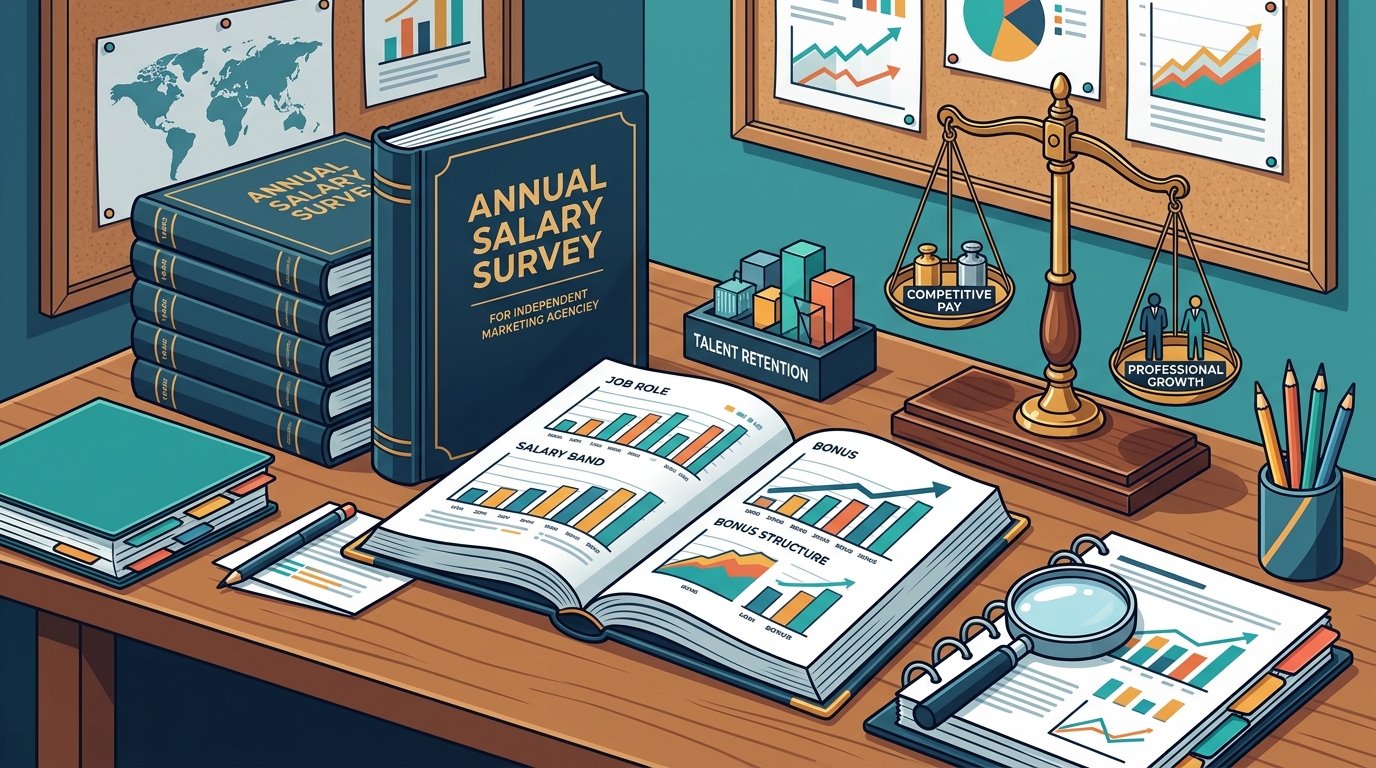
AMI publishes an annual Salary Survey that is tailored exclusively for the advertising industry. Unlike general marketing surveys, this data reflects the specific nuances of advertising roles, such as account executives, art directors, media planners, and copywriters. The survey includes detailed breakdowns by agency size, geographic region, and years of experience.
Peer Group Insights
Beyond the survey, AMI offers Virtual Agency Owner Peer Groups. These groups allow agency leaders to discuss compensation strategies in a confidential setting. This qualitative data complements the quantitative survey results, providing context on how other owners are navigating retention and benefits.
Comprehensive Support
AMI's approach extends beyond data. Through Advertising Agency Consulting and Advertising Agency Training, they help owners implement survey data into actionable HR policies. This holistic support ensures that the data translates into real-world operational improvements.
Comparing Industry Survey Providers
Choosing the right survey depends on your agency's specific needs. The table below compares the primary options available to independent marketing agencies.
| Provider | Primary Focus | Data Granularity | Best For | Access Model |
|---|---|---|---|---|
| SMPS | General Marketing & BD | High (Role & Region Specific) | Digital Marketing Agencies | Annual Membership |
| AMI | Advertising Agencies | Very High (Industry Specific) | Traditional & Digital Ad Agencies | Membership / Research Purchase |
| BLS / Dept of Economics | General Labor Market | Low (Broad Occupational) | Macro Economic Context | Free / Basic Report |
| ERI / Executive Compensation | Executive & Corporate | High (C-Suite & VP) | Large Agency Executives | Premium Subscription |
Implementing Survey Data into Your Pay Structure
Acquiring the data is only the first step. The real value lies in how you apply it. Here is a strategic framework for integrating survey data into your agency's compensation model.
1. Benchmark Key Roles
Identify the top 10 most critical roles in your agency. Use the survey data to determine the 25th, 50th, and 75th percentiles for each role. Decide where you want to position your offers. For example, if you are a premium agency, you might aim for the 75th percentile to attract top talent.
2. Standardize Benefits
Compare your benefits package against the survey's aggregate data. If your competitors offer a 401(k) match and you do not, you are effectively reducing your total compensation by a significant percentage. Adjust your benefits to remain competitive without compromising cash flow.
3. Conduct Regular Reviews
Market rates change annually. Establish a calendar reminder to review the latest AMI Research or SMPS data every year. Use this data to inform annual merit increases and promotion adjustments.
4. Communicate Transparently
Share the rationale behind compensation decisions with your team. When employees understand that pay is based on objective market data rather than subjective negotiation, trust in leadership increases. This transparency is a key component of Client Satisfaction and employee retention.
Key Takeaways
- SMPS Data: The Society for Marketing Professional Services provides the largest compensation survey for marketing and business development professionals, updated annually since 2014.
- AMI Specialization: The Agency Management Institute offers industry-specific salary surveys and peer groups tailored exclusively for advertising agency owners.
- Retention Impact: Agencies using structured salary surveys report significantly higher retention rates among senior creative staff.
- Executive Tools: For C-suite roles, resources like Executive Compensation track data from over 400 job titles across publicly traded corporations.
- Baseline Resources: The Department of Economics and BLS provide free baseline data for broad occupational outlooks.
- Peer Insights: AMI's Virtual Agency Owner Peer Groups offer qualitative insights that complement quantitative survey data.
- Strategic Implementation: Benchmarking only the top 10 critical roles is a high-ROI strategy for independent agencies with limited HR resources.
Frequently Asked Questions
What is the best salary survey for advertising agencies?
The AMI Salary Survey is widely considered the best resource for advertising agencies because it is specifically tailored to the unique roles and structures of the advertising industry, unlike general marketing surveys.
How often is the SMPS Salary Survey updated?
The SMPS Salary Survey is updated annually, providing the SMPS community with the latest hiring and spending trends for marketing professionals.
Can independent agencies access executive compensation data?
Yes, independent agencies can access executive compensation data through specialized research guides and tools like those provided by the Library of Congress, which track data from publicly traded corporations.
Why is benchmarking important for agency retention?
Benchmarking ensures that your agency's compensation is competitive with the market, preventing talent loss to competitors who may offer higher salaries based on accurate data.
Does AMI offer support beyond salary surveys?
Yes, AMI offers comprehensive support including agency consulting, training, and peer groups to help owners implement compensation strategies effectively.
What is the difference between SMPS and AMI surveys?
SMPS focuses on general marketing and business development roles, while AMI focuses specifically on advertising agency roles, providing more granular data for that niche.
How can I use salary data to negotiate with clients?
While salary data primarily informs internal pay, understanding market rates for agency labor helps you justify your service fees to clients, ensuring your pricing reflects the true cost of high-quality talent.
Next Steps for Agency Growth
Accurate compensation data is not just an HR metric; it is a strategic business asset. By leveraging the right survey resources, you can build a more stable, motivated, and high-performing team. For advertising agency owners, the path to clarity begins with the Agency Management Institute.
Explore the latest 2026 Research to gain immediate insights into current market trends. Join the Virtual Agency Owner Peer Groups to connect with fellow leaders and discuss compensation strategies. Schedule a consultation for Advertising Agency Consulting to implement these insights into your business model today.