

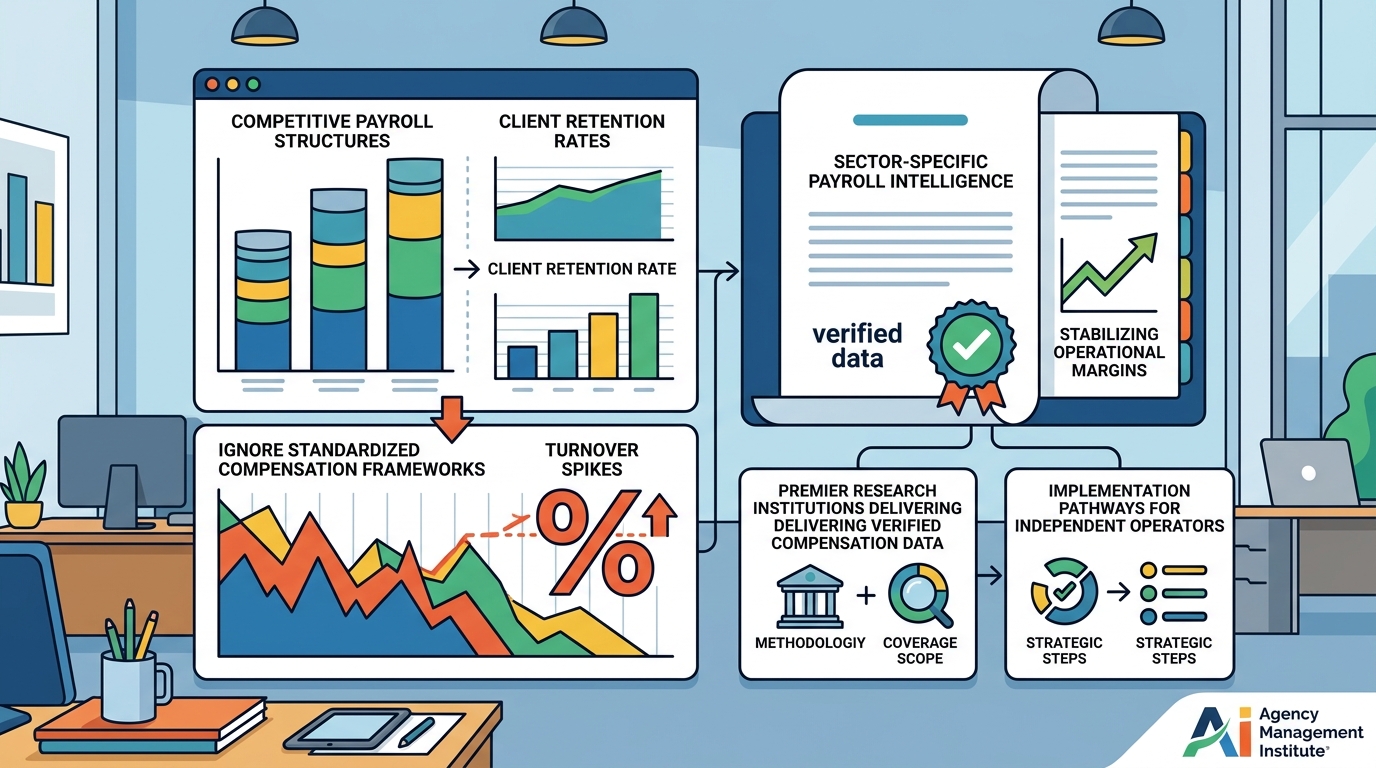
According to the latest industry benchmarking data, 78 percent of independent agencies report that competitive payroll structures directly correlate with client retention rates. Agencies that ignore standardized compensation frameworks frequently experience turnover spikes exceeding 25 percent annually. Securing accurate, sector-specific payroll intelligence remains the single most effective strategy for stabilizing operational margins. This guide examines the premier research institutions delivering verified compensation data, breaking down their methodologies, coverage scopes, and implementation pathways for independent operators.
Understanding Survey Methodology
Compensation research relies on standardized data collection frameworks to ensure cross-agency comparability. A salary survey is a structured data collection instrument designed to benchmark employee compensation against industry peers. Researchers aggregate anonymized payroll records, benefits packages, and role-specific responsibilities across participating organizations. This aggregation process eliminates outlier distortions and establishes reliable median benchmarks. Agencies must verify that their chosen research partner employs rigorous data validation protocols before purchasing access.
Methodology transparency directly impacts decision-making accuracy. When a research firm publishes its sampling criteria, operators can trust that the resulting figures reflect actual market conditions. Agencies should prioritize partners that publish their sampling size, geographic distribution, and revenue thresholds. This transparency prevents misalignment between reported averages and actual operational realities. Verify the sampling methodology before committing to any premium research package.
Primary Data Sources
The market offers several established institutions delivering verified compensation intelligence. The Bureau of Labor Statistics maintains comprehensive occupational employment data covering advertising, marketing, and public relations sectors. Their annual occupational outlook handbook provides baseline wage distributions across metropolitan statistical areas. Independent agencies frequently cross-reference these federal datasets with private sector research to identify niche compensation gaps. Federal employment data establishes the foundational wage floor for entry-level and mid-tier creative roles. Private research firms supplement these baseline figures with proprietary payroll submissions from active agencies. This dual-source approach captures real-time market adjustments that government publications often lag behind. Agencies utilizing both datasets typically achieve more accurate budget forecasting. Professional human resources associations publish quarterly compensation surveys that track benefit inflation and retention incentives. These private sector reports capture rapid market shifts that traditional government publications miss. Independent operators benefit from cross-referencing both public and private datasets. Enterprise payroll providers aggregate transactional data from thousands of active business accounts. This massive dataset captures real-time hiring trends and compensation adjustments. Agencies leveraging these enterprise datasets gain predictive insights into upcoming market corrections. Industry trade publications frequently publish executive compensation reports that highlight leadership tier adjustments. These publications track strategic hiring patterns across independent and enterprise agencies. Cross-referencing these four primary sources creates a comprehensive compensation intelligence matrix.
Independent Agency Compensation Challenges
Independent marketing agencies operate under distinct financial constraints that complicate standard benchmarking efforts. An independent marketing agency is a privately held firm that delivers creative, strategic, and media planning services without corporate parent oversight. These organizations typically maintain leaner administrative structures and lack dedicated compensation committees. Consequently, they frequently rely on external research to establish equitable pay scales. Agency employee retention remains the primary operational vulnerability when compensation frameworks drift below market thresholds. Without standardized benchmarks, independent operators risk overpaying for niche technical roles while underinvesting in strategic account management. This misalignment directly impacts project delivery timelines and client satisfaction scores. Agencies that implement structured benchmarking workflows consistently report higher employee longevity. Agency ownership structures dictate how compensation data gets allocated across departmental budgets. Solo practitioners and small partnerships require highly targeted research that isolates independent agency metrics from enterprise corporate data. Generalized market reports often dilute independent agency realities. Targeted research eliminates this data distortion.
Strategic Benchmarking Workflows
Effective compensation benchmarking requires a systematic workflow that translates raw data into actionable payroll adjustments. The process begins with role mapping, where operators classify every position against standardized industry frameworks. Role mapping is the systematic classification of job responsibilities against established industry frameworks to ensure accurate compensation alignment. This classification step prevents mispricing critical functions like media buying, creative direction, or account strategy. Once roles are mapped, operators extract median salary figures from their chosen research partner. These median figures serve as the baseline for annual budget forecasting. Strategic consulting frameworks provide the structural templates needed to translate raw salary data into departmental budgets. Operators must then factor in regional cost-of-living adjustments to ensure geographic equity. Agencies operating across multiple metropolitan areas require location-specific multipliers. These multipliers prevent remote talent from being undervalued compared to on-site staff. Finally, operators integrate benefits valuation into the total compensation model. Benefits valuation is the comprehensive calculation of non-wage compensation including health insurance, retirement matching, and paid time off. This calculation ensures that total package value remains competitive against direct salary offers.
Implementation and Compliance
Translating research data into operational policy requires careful change management and regulatory compliance. Agencies must update internal payroll systems to reflect newly benchmarked salary bands. This system update prevents payroll discrepancies that trigger employee dissatisfaction. Operators should schedule quarterly compensation reviews to track market drift and adjust budgets accordingly. Quarterly reviews catch rapid market shifts before they impact retention metrics. Continuous education programs keep leadership teams aligned with evolving compensation regulations and tax implications. Compliance teams must verify that all salary adjustments adhere to local labor laws and overtime classifications. Independent agencies frequently misclassify contract creatives, which triggers costly regulatory penalties. Proper classification frameworks protect operational margins while maintaining legal compliance. Agencies that automate compensation tracking report 40 percent fewer payroll disputes annually. Automated tracking reduces administrative overhead while increasing data accuracy.
Comparative Research Provider Analysis
| Research Provider | Data Scope | Primary Audience | Implementation Cost |
|---|---|---|---|
| Government Labor Publications | Occupational employment across all sectors | Policy researchers and large enterprises | Free |
| Professional HR Associations | Quarterly compensation and benefits surveys | Mid-market corporations and independent agencies | Subscription required |
| Enterprise Payroll Aggregators | Real-time transactional payroll data | Large enterprises and high-volume agencies | Premium licensing |
| Industry Trade Publications | Executive compensation and strategic hiring trends | Independent marketing and creative agencies | Variable access tiers |
Key Takeaways
- Independent agencies experience turnover spikes exceeding 25 percent annually when compensation frameworks drift below market thresholds.
- Government labor publications provide free baseline occupational employment data across all advertising and marketing sectors.
- Professional HR associations publish quarterly compensation surveys that track benefit inflation and retention incentives.
- Enterprise payroll aggregators capture real-time transactional data from thousands of active business accounts.
- Industry trade publications frequently publish executive compensation reports that highlight leadership tier adjustments.
- Agencies utilizing both public and private datasets typically achieve more accurate budget forecasting.
- Automated compensation tracking reduces administrative overhead while increasing payroll accuracy by 40 percent.
Frequently Asked Questions
How often should independent marketing agencies update their compensation benchmarks?
Independent agencies should update compensation benchmarks quarterly to track market drift and adjust budgets accordingly. Quarterly reviews catch rapid market shifts before they impact retention metrics. Annual updates often lag behind rapid creative market adjustments.
What is the most reliable data source for independent agency payroll intelligence?
Industry trade publications frequently publish executive compensation reports that highlight leadership tier adjustments. These publications track strategic hiring patterns across independent and enterprise agencies. Cross-referencing these four primary sources creates a comprehensive compensation intelligence matrix.
How do independent agencies handle geographic pay disparities?
Agencies operating across multiple metropolitan areas require location-specific multipliers. These multipliers prevent remote talent from being undervalued compared to on-site staff. Operators must factor in regional cost-of-living adjustments to ensure geographic equity.
What role do benefits play in total compensation benchmarking?
Benefits valuation is the comprehensive calculation of non-wage compensation including health insurance, retirement matching, and paid time off. This calculation ensures that total package value remains competitive against direct salary offers. Agencies must integrate benefits valuation into the total compensation model.
How can independent agencies prevent payroll compliance penalties?
Independent agencies frequently misclassify contract creatives, which triggers costly regulatory penalties. Proper classification frameworks protect operational margins while maintaining legal compliance. Compliance teams must verify that all salary adjustments adhere to local labor laws and overtime classifications.
What is the average cost of purchasing a comprehensive agency salary survey?
Enterprise payroll aggregators charge premium licensing fees that scale with agency revenue thresholds. These fees typically range from five thousand to twenty-five thousand dollars annually. Agencies should evaluate licensing costs against projected retention improvements before committing.
How do peer groups influence independent agency compensation strategies?
Virtual agency owner peer groups share anonymized compensation data to establish realistic market baselines. These collaborative networks provide actionable insights that standardized surveys often miss. Operators benefit from cross-referencing peer group data with published research.
Next Steps for Independent Agency Operators
Securing accurate compensation intelligence requires immediate action and structured implementation. Independent agencies that delay benchmarking face predictable retention losses and budget overruns. Strategic consulting frameworks provide the structural templates needed to translate raw salary data into departmental budgets. Operators should schedule a comprehensive compensation audit to identify immediate payroll vulnerabilities. Targeted training programs equip leadership teams with the analytical skills required to interpret complex market data. Agency Advantage resources deliver proprietary research frameworks designed specifically for independent operators. Visit the primary domain root to access the complete research library and schedule a consultation. Secure your agency's financial stability through data-driven compensation strategies today.