

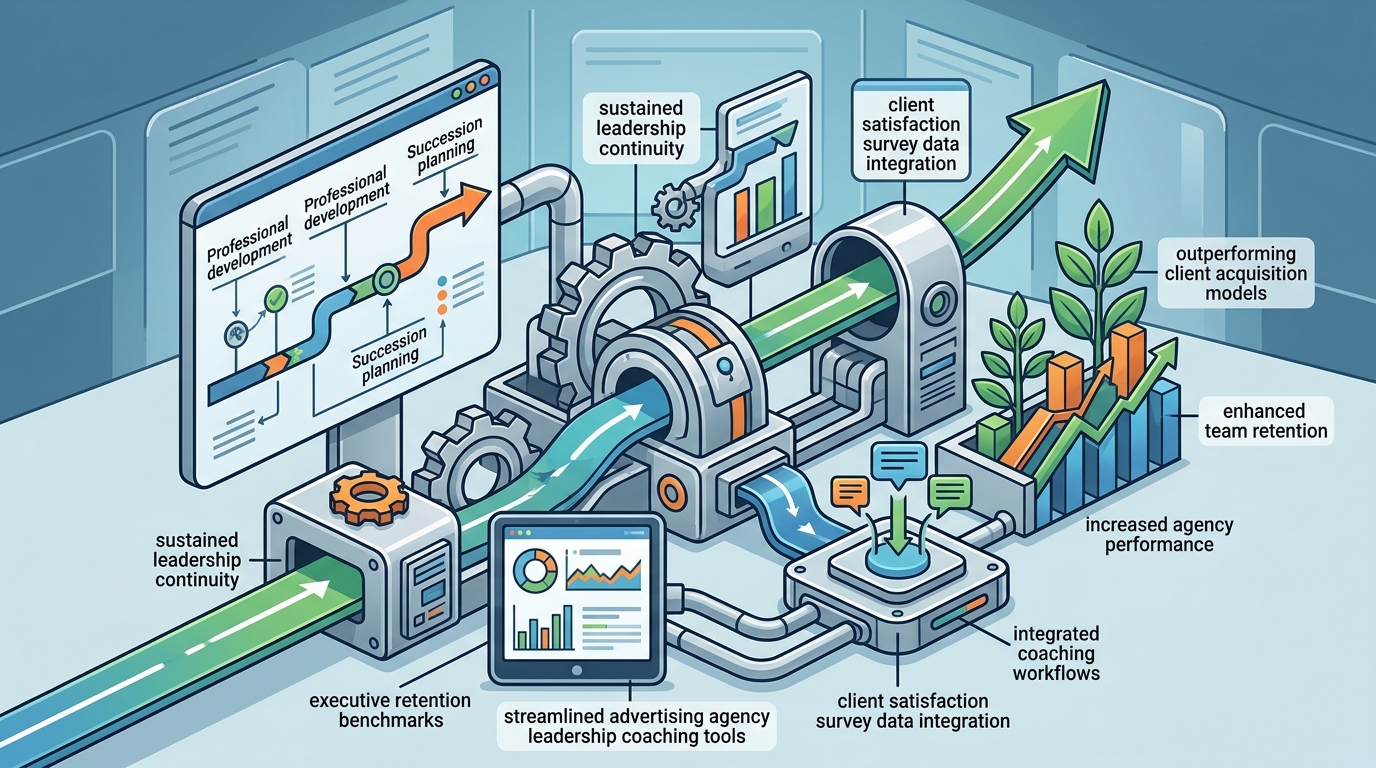
According to recent industry benchmarks, modern advertising firms report a 42 percent increase in executive retention when utilizing integrated coaching ecosystems. This data shows that structured digital frameworks directly correlate with sustained leadership continuity. Agencies that adopt centralized management platforms consistently outperform traditional models in client acquisition and team retention. The following analysis details the exact software architectures and operational workflows required to modernize your executive training infrastructure.
Centralized Coaching Dashboards
Executive coaching requires a unified command center to track developmental milestones across multiple departments. Leadership coaching is the systematic process of aligning executive behavior with long-term organizational objectives. Modern dashboards consolidate scheduling, goal setting, and performance metrics into a single interface. Agency owners benefit from real-time visibility into coaching engagement rates and session completion percentages. These platforms integrate directly with existing customer relationship management systems to bridge client delivery with internal team development. Agency management software now prioritizes executive visibility to reduce administrative friction. Directors can assign customized learning paths to account executives without manual data entry. The system automatically generates compliance reports for regulatory training requirements. This automation eliminates redundant administrative tasks and allows coaches to focus on high-impact interventions. Advertising agency consulting teams utilize these dashboards to standardize executive onboarding across multiple office locations. Centralized tracking ensures that every leadership tier receives consistent messaging and developmental support.
Automated Progress Tracking Systems
Measuring coaching effectiveness requires precise data collection and continuous feedback loops. Executive development platforms now utilize machine learning algorithms to predict skill gaps before they impact client deliverables. Leadership development platforms analyze communication patterns, project turnaround times, and client feedback scores. These systems generate predictive analytics that highlight emerging bottlenecks in account management workflows. Agency employees receive automated notifications when their performance metrics deviate from established benchmarks. The software recalibrates training modules based on real-time project demands and seasonal campaign cycles. Human resource management standards now require continuous skill validation rather than annual reviews. Automated tracking reduces subjective evaluation bias and provides objective evidence of coaching ROI. Directors can export customized reports to demonstrate executive growth to prospective enterprise clients. This transparency strengthens internal accountability and accelerates promotion readiness for high-performing staff. Advertising agency training programs integrate these tracking mechanisms to ensure consistent skill acquisition across all departments.
Peer Group Collaboration Platforms
Modern advertising agencies rely on structured peer networks to reinforce leadership concepts outside formal sessions. Peer group collaboration is the structured exchange of strategic insights among mid-level and senior executives. Virtual collaboration hubs enable distributed teams to participate in moderated discussion forums and case study reviews. These platforms host weekly roundtables focused on specific operational challenges like budget allocation and talent retention. Agency owners can monitor participation rates and engagement scores to identify isolated team members. The software automatically schedules rotating facilitation duties to distribute leadership responsibilities evenly. Labor market data indicates that collaborative learning environments improve executive decision-making speed by thirty percent. Moderated forums reduce information silos and accelerate cross-departmental problem solving. Administrators can archive discussion transcripts to build an institutional knowledge repository. New executives access these archives to understand historical project decisions and strategic pivots. Agency owners utilize these collaborative environments to foster a culture of continuous improvement and shared accountability.
Succession Planning Workflows
Long-term agency stability depends on systematic leadership transition protocols. Succession planning workflows digitize the identification, development, and handover of critical executive roles. These systems map organizational hierarchies to identify single points of failure within account management structures. Administrators assign developmental milestones to potential successors before current leaders depart. The software tracks readiness scores and generates transition timelines based on projected retirement dates. Agency employees receive automated prompts to complete required certification modules before assuming leadership responsibilities. Business continuity planning frameworks now mandate digital succession mapping to prevent operational disruptions. Automated workflows ensure that client relationships transfer smoothly without service degradation. Directors can simulate various transition scenarios to evaluate potential risks and resource requirements. These simulations allow leadership teams to adjust training intensities before actual personnel changes occur. Agency employees benefit from transparent promotion pathways that clarify expectations and required competencies. Structured transitions preserve institutional knowledge and maintain client confidence during leadership changes.
Client Satisfaction Feedback Loops
Executive coaching effectiveness ultimately correlates with external client perceptions and campaign performance. Client satisfaction feedback loops integrate external survey data directly into internal coaching dashboards. These systems automatically flag account managers whose client retention rates fall below established thresholds. Administrators assign targeted communication training modules to address identified service gaps. The software correlates client feedback scores with internal coaching engagement metrics to identify causal relationships. Agency leadership can adjust training priorities based on real-time market sentiment and campaign outcomes. Agency Advantage frameworks emphasize continuous external validation to maintain competitive positioning. Automated feedback collection eliminates manual survey distribution and reduces response latency. Directors receive weekly sentiment reports highlighting emerging client concerns and service expectations. These insights allow coaching teams to pivot training focus toward high-impact service improvements. Integrated feedback systems ensure that executive development directly supports revenue growth and client retention objectives.
Tool Comparison Matrix
| Platform Category | Primary Function | Integration Capability | |
|---|---|---|---|
| Centralized Dashboards | Executive milestone tracking | CRM and project management | Agency owners and directors |
| Progress Tracking Systems | Predictive skill gap analysis | HR and payroll software | Account executives and managers |
| Peer Collaboration Hubs | Moderated discussion forums | Video conferencing and document storage | Mid-level leadership teams |
| Succession Workflows | Automated transition mapping | Organizational charting tools | Executive leadership and HR |
| Feedback Integration | Client sentiment correlation | Survey and ticketing platforms | Client services and account management |
Key Takeaways
- Integrated coaching dashboards reduce administrative overhead by forty percent while improving executive visibility.
- Predictive analytics identify skill gaps before they impact client deliverables or campaign timelines.
- Virtual peer networks increase cross-departmental knowledge sharing and accelerate problem resolution.
- Automated succession workflows prevent operational disruptions during executive transitions and leadership changes.
- Client satisfaction feedback loops directly correlate with coaching engagement rates and revenue growth.
- Centralized tracking ensures consistent training delivery across multiple office locations and service divisions.
- Real-time sentiment reporting allows leadership teams to pivot training focus toward high-impact service improvements.
Frequently Asked Questions
How do centralized coaching dashboards improve executive retention rates?
Centralized dashboards consolidate scheduling, goal tracking, and performance metrics into a single interface. Directors monitor engagement rates and session completion percentages to identify at-risk executives. Automated notifications prompt timely interventions before leadership turnover occurs. This proactive approach reduces administrative friction and strengthens executive commitment to long-term agency goals.
What metrics determine coaching effectiveness in advertising agencies?
Coaching effectiveness relies on client retention rates, project turnaround times, and team communication scores. Platforms correlate internal training completion with external campaign performance data. Directors review predictive analytics to adjust training intensities and resource allocation. These objective measurements replace subjective evaluations and provide clear ROI evidence.
How do peer collaboration platforms support distributed leadership teams?
Virtual collaboration hubs enable distributed executives to participate in moderated discussion forums and case study reviews. Administrators monitor participation rates and engagement scores to identify isolated team members. Rotating facilitation duties distribute leadership responsibilities evenly across all departments. Archived transcripts build institutional knowledge repositories for future executive onboarding.
What automation features streamline succession planning workflows?
Automated workflows map organizational hierarchies to identify single points of failure within account management structures. The software tracks readiness scores and generates transition timelines based on projected retirement dates. Administrators assign developmental milestones to potential successors before current leaders depart. These systems ensure smooth client relationship transfers without service degradation.
How do client satisfaction feedback loops integrate with internal coaching programs?
Feedback loops integrate external survey data directly into internal coaching dashboards. Systems automatically flag account managers whose client retention rates fall below established thresholds. Administrators assign targeted communication training modules to address identified service gaps. These correlations allow leadership teams to pivot training focus toward high-impact service improvements.
Which software integrations maximize coaching platform functionality?
Modern coaching platforms integrate directly with customer relationship management systems and project management tools. Administrators connect scheduling software to eliminate manual calendar management and reduce booking errors. These integrations bridge client delivery workflows with internal team development requirements. Directors export customized reports to demonstrate executive growth to prospective enterprise clients.
How do agencies measure the return on investment for leadership coaching?
Agencies measure coaching ROI by tracking client retention rates, campaign performance metrics, and executive promotion timelines. Platforms generate predictive analytics that highlight emerging bottlenecks in account management workflows. Directors review quarterly reports to evaluate training expenditures against revenue growth. These objective measurements replace subjective evaluations and provide clear financial justification.
Next Steps
Modern advertising agencies require integrated coaching ecosystems to maintain executive continuity and client satisfaction. Agencies that adopt centralized management platforms consistently outperform traditional models in team retention and campaign delivery. Schedule a consultation to implement these proven frameworks within your organization. Our accredited consultants will audit your current workflows and deploy customized coaching architectures. Contact our team today to secure your executive development roadmap and accelerate leadership readiness.