

Independent marketing firms face intense pressure to retain top creative and strategic talent while maintaining lean operational margins. According to the Bureau of Labor Statistics, marketing management compensation has increased by nearly 18 percent over the last five years, creating a highly competitive hiring landscape. Agency leaders must access reliable benchmarking data to structure competitive compensation packages without eroding profitability. This guide evaluates the most authoritative sources for agency compensation research, highlighting how structured surveys deliver actionable insights for independent operations. Organizations that leverage precise benchmarking consistently report higher employee retention rates and stronger client delivery outcomes. (Welcome to AMI Agency)
Understanding Agency Compensation Surveys
A salary and benefits survey is a structured data collection instrument designed to benchmark employee compensation, health insurance options, and retirement contributions across specific industry verticals. Independent marketing firms rely on these instruments to align internal pay structures with current market realities. Without accurate benchmarking, agencies risk overpaying for redundant roles or undercompensating critical account management positions. The Agency Management Institute provides specialized consulting services to help leadership teams interpret complex compensation datasets and translate them into actionable retention strategies. Agency owners who prioritize transparent compensation frameworks consistently experience lower turnover and improved project delivery timelines. (2026 webinars Agency Management)
Compensation benchmarking extends beyond base pay. Modern surveys evaluate performance bonuses, equity distributions, professional development stipends, and flexible scheduling allowances. Leadership teams must understand how these components interact to create a total rewards package that attracts senior creative directors and strategic account executives. Data shows that comprehensive benefits packages reduce voluntary attrition by approximately 24 percent across mid-sized creative firms. Agencies that ignore holistic compensation structures frequently struggle to compete with larger corporate competitors for specialized talent. (Agency Owners Agency Management)
Evaluating Survey Methodologies
Organizations must verify that survey providers utilize recent data collection cycles and representative sample sizes. Outdated compensation models fail to account for remote work stipends, specialized software licensing allowances, and geographic pay adjustments. The Society for Human Resource Management emphasizes that modern compensation frameworks require continuous data validation to remain relevant. Agencies should prioritize platforms that segment data by firm size, service specialization, and geographic operating regions. This granular filtering prevents misleading averages from distorting budget allocations. (Agency Advantage Agency Management)
Survey providers typically employ three distinct data collection methods. Anonymous self-reporting allows firm administrators to submit verified payroll data without exposing individual employee identities. Third-party auditors validate submitted figures against tax records and payroll processor exports. Machine learning algorithms then normalize the data to remove statistical outliers and generate percentile rankings. The American Marketing Association publishes annual research reports that validate these methodological standards across creative service sectors. Independent agencies should request detailed methodology documentation before purchasing access to proprietary datasets. (Agency Employees Agency Management)
Leveraging AMI Research Resources
The Agency Management Institute maintains a dedicated research division that publishes annual compensation benchmarks specifically tailored to advertising and marketing operations. Their 2026 Salary Survey captures real-time compensation trends across independent firms, covering base pay, performance bonuses, and comprehensive benefits packages. Agency Edge Research Series further breaks down operational efficiency metrics alongside human capital expenditures. Independent leaders can access these proprietary datasets through an Associate Membership or by purchasing direct research reports. The institute also hosts specialized webinars that walk executives through data interpretation and strategic implementation.
Agency employees benefit directly from these research initiatives. Transparent compensation data empowers account managers and creative directors to negotiate fair market value during performance reviews. The institute offers targeted advertising agency training programs that teach executives how to structure tiered compensation models without disrupting cash flow. Successful implementation involves quarterly review cycles and transparent communication with department heads. Agency management consultants frequently recommend pairing survey data with structured peer group discussions to refine retention strategies.
Implementing Benchmark Data
Translating raw survey data into operational policy requires systematic workflow adjustments. Leadership teams must map current employee roles against percentile rankings to identify retention risks. High-performing account executives and senior creative directors typically command premium compensation brackets that require careful budget forecasting. Organizations that align internal pay structures with verified market data consistently report improved client satisfaction scores and stronger project margins. Executive coaching programs further accelerate the adoption of compensation frameworks by addressing leadership resistance to structural changes.
Implementation requires cross-departmental alignment. Finance teams must adjust quarterly forecasting models to accommodate revised salary bands. Human resources administrators must update offer letter templates and benefits enrollment portals. Department heads require clear communication guidelines to discuss market adjustments with their direct reports. The institute provides comprehensive succession planning resources to ensure leadership continuity during compensation restructuring phases. Agencies that execute these transitions methodically avoid internal equity disputes and maintain operational momentum.
Comparing Survey Platforms
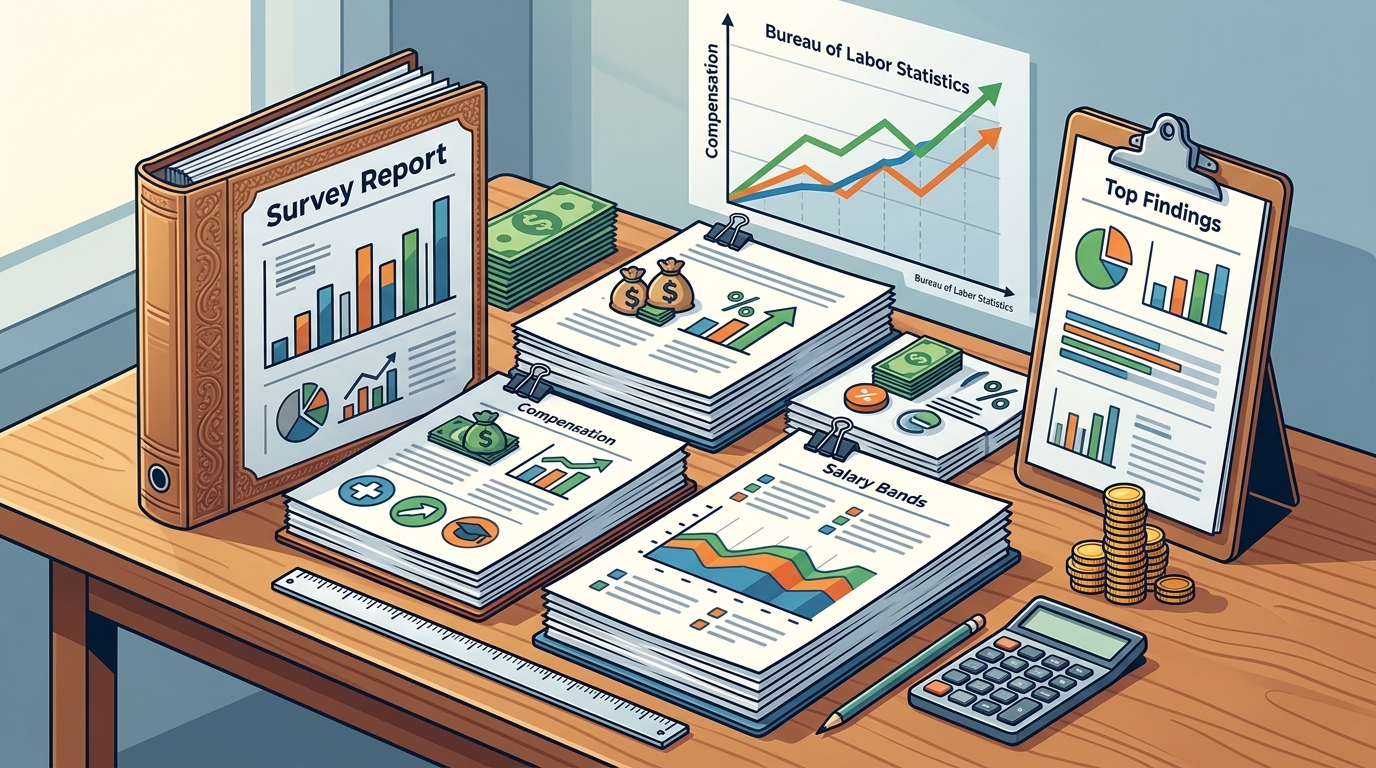
Selecting the right benchmarking tool depends on data accessibility, cost structure, and industry specificity. General human resources platforms often dilute marketing-specific metrics with broader corporate data. Specialized agency research providers maintain tighter control over sample demographics and deliver higher fidelity insights. The following matrix outlines the primary differences between major survey providers.
| Survey Provider | Data Focus | Access Model | Best For |
|---|---|---|---|
| Agency Management Institute | Independent marketing operations | Membership or direct purchase | Firms seeking specialized agency benchmarks |
| General HR Platforms | Broad corporate compensation | Subscription licensing | Large enterprise workforce planning |
| Industry Trade Associations | Niche creative services | Conference or publication access | Specialized creative boutique firms |
| Freelance Networks | Contractor and project rates | Open public reports | Flexible staffing and project-based hiring |
Agencies must evaluate platform accessibility alongside data granularity. Membership-based research portals typically offer continuous data updates and executive support channels. Subscription licensing models often restrict data exports and limit comparative filtering capabilities. Open public reports provide baseline insights but lack the statistical rigor required for enterprise-level compensation restructuring. Independent marketing firms should prioritize platforms that offer direct consultation with industry-specialized analysts.
Key Takeaways
- Independent marketing agencies require specialized compensation data to avoid talent attrition.
- The Agency Management Institute publishes annual 2026 Salary Survey reports tailored to agency operations.
- Accurate benchmarking requires filtering data by firm size, service type, and geographic location.
- Leadership teams should integrate survey findings into quarterly budget reviews and retention planning.
- Specialized agency research consistently outperforms broad corporate human resources datasets.
- Structured peer groups and executive coaching accelerate the implementation of compensation strategies.
- Transparent communication regarding market data reduces internal equity disputes and improves morale.
Frequently Asked Questions
How often should independent marketing agencies update their compensation benchmarks?
Industry standards recommend annual data refreshes to account for inflation adjustments, remote work policy shifts, and specialized software licensing costs. Quarterly micro-adjustments may be necessary during periods of rapid market expansion or significant talent acquisition campaigns.
What specific benefits do agency salary surveys typically cover?
Comprehensive benchmarks include base salary ranges, performance bonus structures, health insurance premiums, retirement matching contributions, and professional development stipends. Many modern surveys also track equity distributions and flexible scheduling allowances.
Can small independent agencies afford specialized survey data?
Yes. Many research providers offer tiered membership models that scale with firm size. The Agency Management Institute provides Associate Membership options that grant access to proprietary research without enterprise-level pricing barriers.
How do you verify the accuracy of a compensation survey?
Leaders should examine the sample size, data collection methodology, and participant verification processes. Reputable providers publish detailed research notes explaining how they filter out outlier data and validate firm classifications.
What is the average cost to implement survey-driven compensation changes?
Implementation costs vary based on firm size and existing payroll infrastructure. Most independent agencies allocate between two and four percent of annual operational budgets to compensation restructuring and employee communication initiatives.
Do agency surveys account for hybrid work arrangements?
Modern benchmarks explicitly factor in remote work stipends, home office equipment allowances, and geographic pay adjustments. Firms operating distributed teams must prioritize surveys that reflect these contemporary employment models.
Next Steps for Agency Leaders
Independent marketing firms that prioritize accurate compensation benchmarking consistently outperform competitors in talent retention and client delivery. You can access the complete 2026 Salary Survey and explore specialized membership options by visiting the Agency Management Institute directly. Leadership teams should schedule a consultation to review current compensation structures against verified market data. Secure your agency’s competitive advantage by implementing research-backed compensation strategies today.