

Small to mid-sized marketing agencies face a unique challenge: delivering world-class client experiences without the deep benches and vast resources of holding-company shops. One of the most effective yet overlooked strategies is joining an agency owner peer network. A peer network is a confidential group of non-competing agency leaders who meet regularly to share financials, solve problems, and hold each other accountable. When agency owners learn collaboratively, the improvements flow downstream to every client relationship. Here is a practical guide to leveraging peer networks for measurable gains in client satisfaction.
Why Peer Networks Matter for Client Satisfaction
Agency ownership can be isolating. As AMI founder Drew McLellan puts it, you cannot objectively see the outside of the bottle from inside. That blind spot affects how you serve clients, price projects, and manage account teams. Peer networks break the isolation by surrounding you with owners who face the same pressures but operate in different markets.
According to the AgencyAnalytics 2024 Benchmarks Report, communication and transparency are the top retention strategies cited by 46% of agency leaders. Peer networks sharpen both skills by forcing regular, candid conversations about what is and is not working inside your shop.
How Agency Peer Networks Actually Work
A peer network is not a casual meetup or a trade association mixer. It is a structured, facilitated group where members commit to openness and mutual accountability.
Confidential Financial Sharing
One of the most insightful aspects of each meeting is that every agency shares its financials with the group. Members learn pricing strategies, margin benchmarks, and resource-allocation tactics they can immediately apply to client engagements. AMI's Live Owner Peer Groups are built around this model.
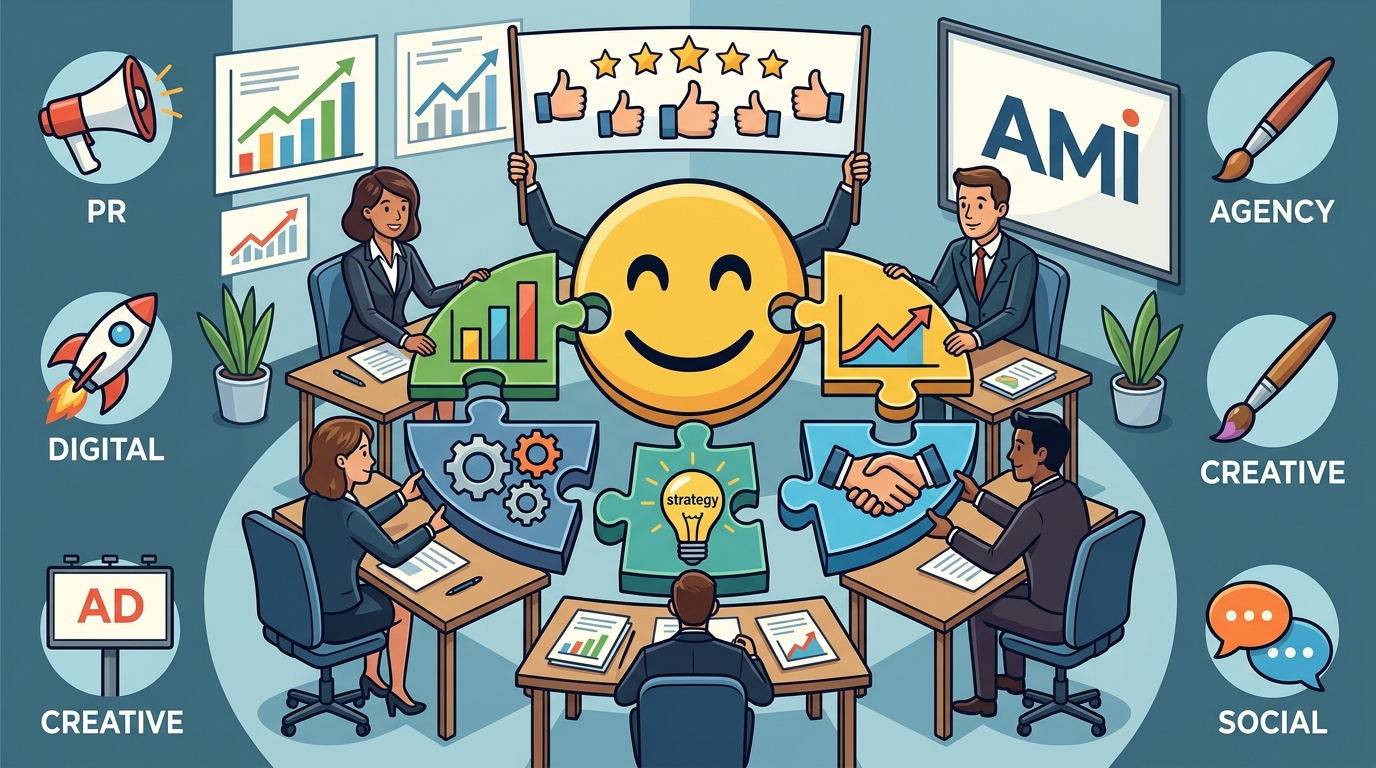
Non-Competing, Diverse Membership
AMI admits only one company from any specific geographic market to a network. Each group blends advertising agencies, PR firms, digital shops, and design studios, which means every conversation delivers fresh cross-discipline perspective you can bring back to your clients.
Virtual and Live Formats
AMI offers both virtual peer groups (90-minute monthly Zoom sessions) and live peer groups (two-day in-person meetings twice a year). This flexibility lets owners choose the cadence that fits their schedule while still getting consistent outside input.
5 Steps to Turn Peer Insights Into Happier Clients
Joining a peer network is step one. Translating what you learn into client-facing improvements is where the real ROI lives.
Step 1: Benchmark Your Client Experience
Before your first peer meeting, audit your current client satisfaction. Use a third-party client satisfaction survey to get candid feedback. Your clients like you and will not be as candid as you need if you self-administer the survey.
Step 2: Bring Real Challenges to the Table
Present your toughest client-service problems to your peer group. The best networks thrive on members' willingness to be open and honest, sharing successes as well as failures.
Step 3: Adopt Proven Playbooks
When a peer shares an onboarding process or QBR template that boosted their retention, adapt it for your agency. According to recent agency studies, a formal onboarding process can improve 12-month retention rates by 35%.
Step 4: Train Your Account Team
Insights mean nothing if they stay in the owner's head. Invest in account executive training so your front-line team can execute the improvements. AMI's Advanced AE Bootcamp, for example, teaches AEs to behave like business owners inside the agency, tracking profitability and growing accounts.
Step 5: Measure and Report Back
Run a follow-up client satisfaction survey 6 to 12 months later. Share the results with your peer group so they can learn from your progress, creating a virtuous cycle of improvement.
Pairing Peer Networks With Client Satisfaction Surveys
A client satisfaction survey is a structured research tool that measures how well your agency meets client expectations across service delivery, communication, and strategic value. Peer networks and surveys work hand in hand: the survey provides the data, and the peer group helps you interpret and act on it.
AMI recommends inviting every client to participate, including the tough ones. When you report back what you learned (good and bad), you reassure clients that you are open to continual improvement and feedback. That transparency alone can prevent a deal-breaking issue from festering. Learn more about AMI's approach to client satisfaction surveys.
Client Retention Benchmarks Every Agency Should Know
Client retention rate is the percentage of clients your agency keeps over a defined period, and it is one of the clearest indicators of satisfaction. The table below shows how agencies stack up.
| Metric | Benchmark | Source |
|---|---|---|
| Average agency client tenure | 2 to 5 years | AgencyAnalytics 2024 Report |
| Top PR agency retention rate | Up to 97% | Statista, May 2024 |
| Digital agency retention rate | ~84% | Swydo / industry data |
| Profit lift from 5% retention increase | 25% to 95% | Harvard Business Review |
| Top cause of client departure | Delivery dissatisfaction (48%) | Setup 2024 Survey |
These numbers underscore a key point: clients rarely leave over budget. They leave when delivery quality drops. Peer networks help you spot and fix delivery gaps before clients walk.
Key Takeaways
- A peer network gives agency owners outside perspective from people who walk in their shoes every day, breaking the isolation that leads to blind spots in client service.
- Sharing financials and operational challenges in a confidential setting surfaces actionable improvements you can apply to client engagements immediately.
- Third-party client satisfaction surveys provide the objective data you need; your peer group helps you turn that data into a plan.
- Formal onboarding processes, often shared among peer members, can lift 12-month client retention by up to 35%.
- Communication and transparency are the number-one retention strategy, according to 46% of agency leaders surveyed in 2024.
- A 5% improvement in client retention can increase agency profits by 25% to 95%.
- Training your account team to act on peer-network insights ensures improvements reach every client touchpoint.
Frequently Asked Questions
What is an agency peer network?
An agency peer network is a facilitated group of non-competing agency owners who meet regularly to share best practices, financial benchmarks, and operational strategies. AMI's networks, for example, include a mix of advertising, PR, digital, and design firms.
How do peer networks improve client satisfaction?
Members learn proven client-service tactics from peers who have already tested them. By adopting better onboarding, communication, and reporting processes, agencies deliver a stronger client experience.
How often do AMI peer groups meet?
AMI offers virtual peer groups that meet monthly for 90 minutes and live peer groups that meet twice a year for intensive two-day sessions. Some members participate in both formats.
Are peer networks only for large agencies?
No. AMI specifically serves small to mid-sized agencies. Most members have fewer than 50 employees, and AMI works with over 250 agencies each year.
What role do client satisfaction surveys play?
Surveys give you objective baseline data on how clients perceive your service. When paired with peer-group guidance, the survey results become a roadmap for targeted improvements.
How much does it cost to join a peer network?
Costs vary by organization and membership tier. AMI offers multiple membership levels, from associate memberships without a peer group to full live network memberships with extensive benefits.
What if my competitors are in the same network?
Reputable networks like AMI admit only one agency per geographic market or niche specialty, eliminating competitive overlap and encouraging candid sharing.
How quickly will I see results?
Many owners report actionable takeaways after their very first meeting. Measurable client satisfaction improvements typically appear within 6 to 12 months as new processes take hold.
Your Next Step
If you are ready to stop guessing and start learning from peers who have already solved your toughest client challenges, explore how AMI serves agencies and find the peer group format that fits your goals. Your clients will notice the difference.