

How to Measure the ROI of Agency Workshops and Training Programs
Agency owners invest thousands of dollars in workshops, bootcamps, and professional development every year. But how do you know those investments are actually paying off? Measuring the return on investment (ROI) of training programs is one of the most important steps you can take to protect your bottom line and build a stronger team. In this guide, we walk through proven frameworks, practical metrics, and agency-specific strategies so you can confidently tie every training dollar to real business results. Whether you send your team to an AE Bootcamp or attend an owner workshop yourself, these methods will help you quantify the impact.
What Is Training ROI?
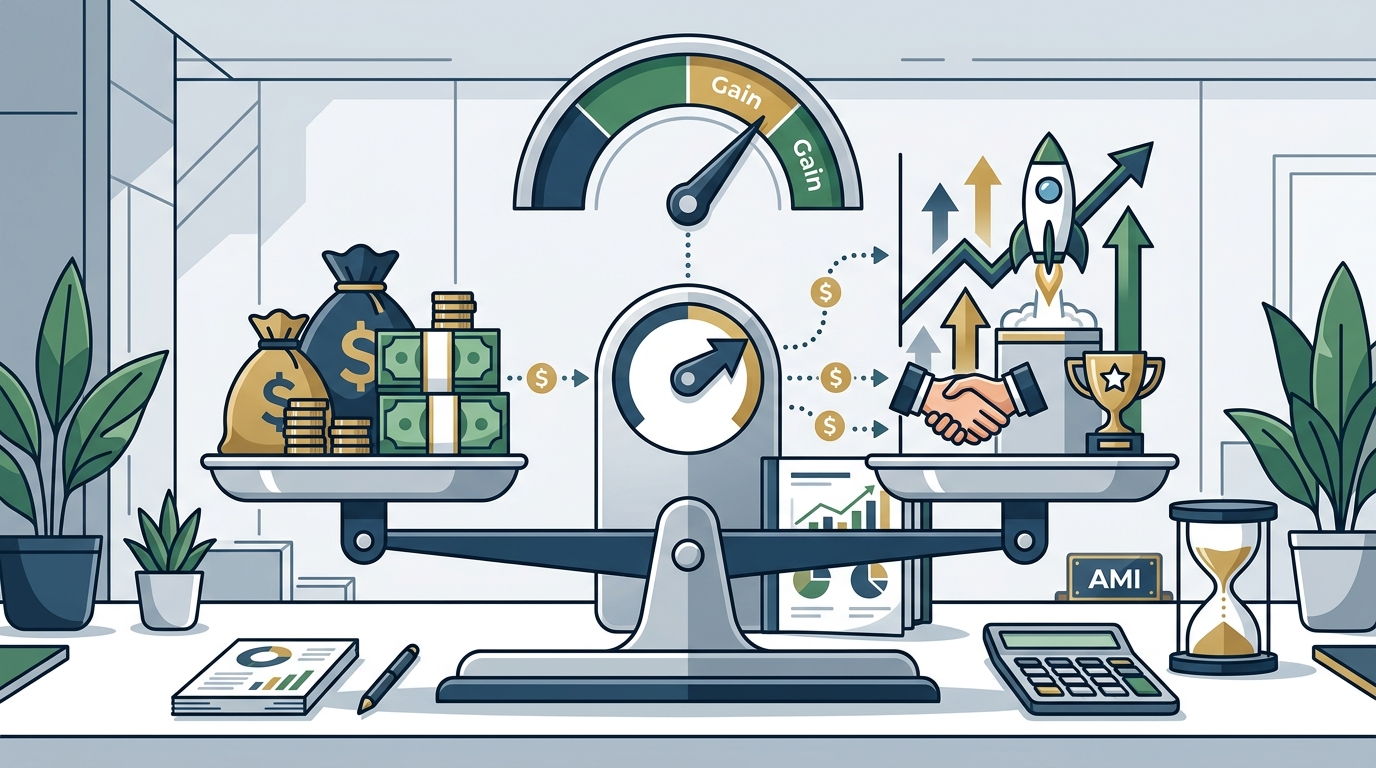
Training ROI (Return on Investment) is the quantifiable financial value a business gains from its learning and development programs compared to the total cost of running them. In simple terms, it answers the question: for every dollar you spent on training, how much did you get back?
Unlike a post-workshop satisfaction survey, ROI digs into actual business outcomes like revenue growth, client retention, and profitability improvements. For small to mid-sized agencies that operate on tight margins, this distinction is critical.
Why Measuring Training ROI Matters for Agencies
According to research cited by the Association for Talent Development, organizations that actively measure training ROI see 24% higher profit margins than those that do not. For agency owners, that gap can mean the difference between a healthy year and a stressful one.
Training programs like AMI's Money Matters workshop are built to drive specific financial outcomes. But without a measurement plan, you are left guessing whether the investment paid off. Measurement also helps you decide which programs to repeat, which to skip, and where to double down.
The Kirkpatrick Model: A Proven Evaluation Framework
The Kirkpatrick Model is the world's most widely used framework for measuring the impact of learning. Developed by Donald Kirkpatrick in the 1950s, it breaks evaluation into four levels that move from surface-level feedback to deep business impact.
The Four Levels
| Level | What It Measures | Agency Example |
|---|---|---|
| 1 - Reaction | Did participants find the training relevant and engaging? | Post-workshop survey after an Advanced AE Bootcamp |
| 2 - Learning | Did they acquire new knowledge or skills? | Pre/post quiz on consultative selling techniques |
| 3 - Behavior | Are they applying what they learned on the job? | Manager observes AE leading a client strategy session |
| 4 - Results | Did the training produce measurable business outcomes? | AGI per client increases 10% in the quarter after training |
Most agencies stop at Level 1, the "smile sheet." As noted by Kirkpatrick Partners, the model's greatest strength is its simplicity and flexibility, making it adaptable across industries and program types. Pushing to Levels 3 and 4 is where you unlock real insight.
The Phillips ROI Model
The Phillips ROI Model is an extension of Kirkpatrick that adds a fifth level focused on financial return. It calculates whether a training program's monetary benefits outweigh its costs. This is especially useful when your leadership team wants a hard dollar figure before approving future training budgets.
The Training ROI Formula
The standard formula for calculating training ROI is straightforward:
ROI (%) = ((Net Benefits of Training - Total Costs of Training) / Total Costs of Training) x 100
What Counts as Costs
Include tuition, travel, accommodations, employee time away from billable work, and any materials or technology fees. For example, AMI's workshops are priced at $2,195 for the first attendee, so that figure plus travel becomes your cost baseline.
What Counts as Benefits
Benefits include increased revenue, higher AGI per client, reduced employee turnover, improved close rates, and cost savings from fewer errors. According to industry benchmarks, most organizations see 25-300% ROI from effective training programs, meaning $1.25 to $4 returned for every dollar spent.
Agency-Specific Metrics to Track
Generic training metrics do not always capture what matters to an agency. Here are the KPIs that connect workshop learning directly to agency performance:
- AGI (Adjusted Gross Income) growth: The single most important financial metric for agencies. Track it before and after training.
- Client retention rate: Did your team's improved skills help you keep clients longer?
- Average revenue per client: Are AEs growing accounts after attending programs like AMI's staff workshops?
- Employee retention: Training signals investment in your people, which reduces costly turnover.
- Proposal win rate: Sharper pitching skills from workshops should show up in your close percentage.
- Utilization rate: Better-trained teams work more efficiently, improving billable hours ratios.
Before, During, and After: A Measurement Timeline
Before Training
Set SMART goals that tie directly to business outcomes. Establish baseline data for every metric you plan to track. As Harrison Assessments recommends, when training programs begin without a specific goal, it is nearly impossible to determine ROI.
During Training
Collect engagement data and initial reaction surveys. Note any immediate insights or action items your team commits to implementing. AMI workshops are designed so that attendees leave with a concrete implementation plan, which makes post-training measurement far easier.
After Training (30, 60, 90 Days)
This is where real measurement happens. Compare your post-training metrics to baselines. Use supervisor assessments, client feedback via tools like AMI's client satisfaction surveys, and financial dashboards to track changes. Do not rely solely on the survey handed out on the last day of a workshop. The meaningful data appears weeks and months later.
Key Takeaways
- Training ROI is a financial measurement, not a satisfaction score. It compares net benefits to total costs.
- The Kirkpatrick Model provides four levels of evaluation: Reaction, Learning, Behavior, and Results.
- Use the standard ROI formula: ((Benefits - Costs) / Costs) x 100.
- Establish baseline metrics before any training program begins.
- Track agency-specific KPIs like AGI growth, client retention, and proposal win rates.
- Measure at 30, 60, and 90 days post-training for the most reliable data.
- Peer learning through agency owner peer networks amplifies training ROI by reinforcing skills over time.
Frequently Asked Questions
What is the simplest way to calculate training ROI?
Use the formula: ROI (%) = ((Net Benefits - Training Costs) / Training Costs) x 100. Identify one or two measurable outcomes, capture baseline data before the training, and compare results 60 to 90 days after.
How long does it take to see ROI from a workshop?
Some gains are immediate, like a refined pitch process. Others, like improved client lifetime value, take three to six months to manifest. Plan your measurement windows accordingly.
What is the Kirkpatrick Model?
The Kirkpatrick Model is a four-level framework for evaluating training effectiveness. Its levels are Reaction, Learning, Behavior, and Results. It has been the industry standard since the 1950s and is used across every sector.
How do I isolate the impact of training from other factors?
Use control groups when possible by comparing trained and untrained team members. You can also use supervisor assessments to estimate how much of a performance improvement is attributable to the training versus other factors like market conditions.
What metrics matter most for marketing agencies?
AGI growth, client retention rate, average revenue per client, employee retention, and proposal win rate are the most direct indicators of workshop impact for agencies.
Is a post-workshop survey enough to measure ROI?
No. A post-workshop survey measures Level 1 (Reaction) only. True ROI requires tracking behavioral changes and business results over weeks and months. Surveys are a starting point, not an endpoint.
How do peer networks reinforce training ROI?
Peer networks create ongoing accountability and knowledge sharing that helps agency owners apply what they learned long after a workshop ends. AMI's peer groups meet regularly to review financial benchmarks and share implementation results.
What is the Phillips ROI Model?
The Phillips ROI Model is an extension of the Kirkpatrick framework that adds a fifth level dedicated to calculating financial return on investment. It is ideal when leadership demands a specific dollar-value justification for training spend.
Take the Next Step
Ready to invest in training that delivers measurable results? Explore AMI's full workshop calendar and start building your measurement plan before you even register. When you pair structured learning with disciplined ROI tracking, every training dollar works harder for your agency.